Does Homeowners Insurance Cover Roof Replacement in NJ?
Yes, when wind, hail or a falling tree damages the roof. No, when it is simply worn out. How ACV, RCV and deductibles work on a NJ claim.
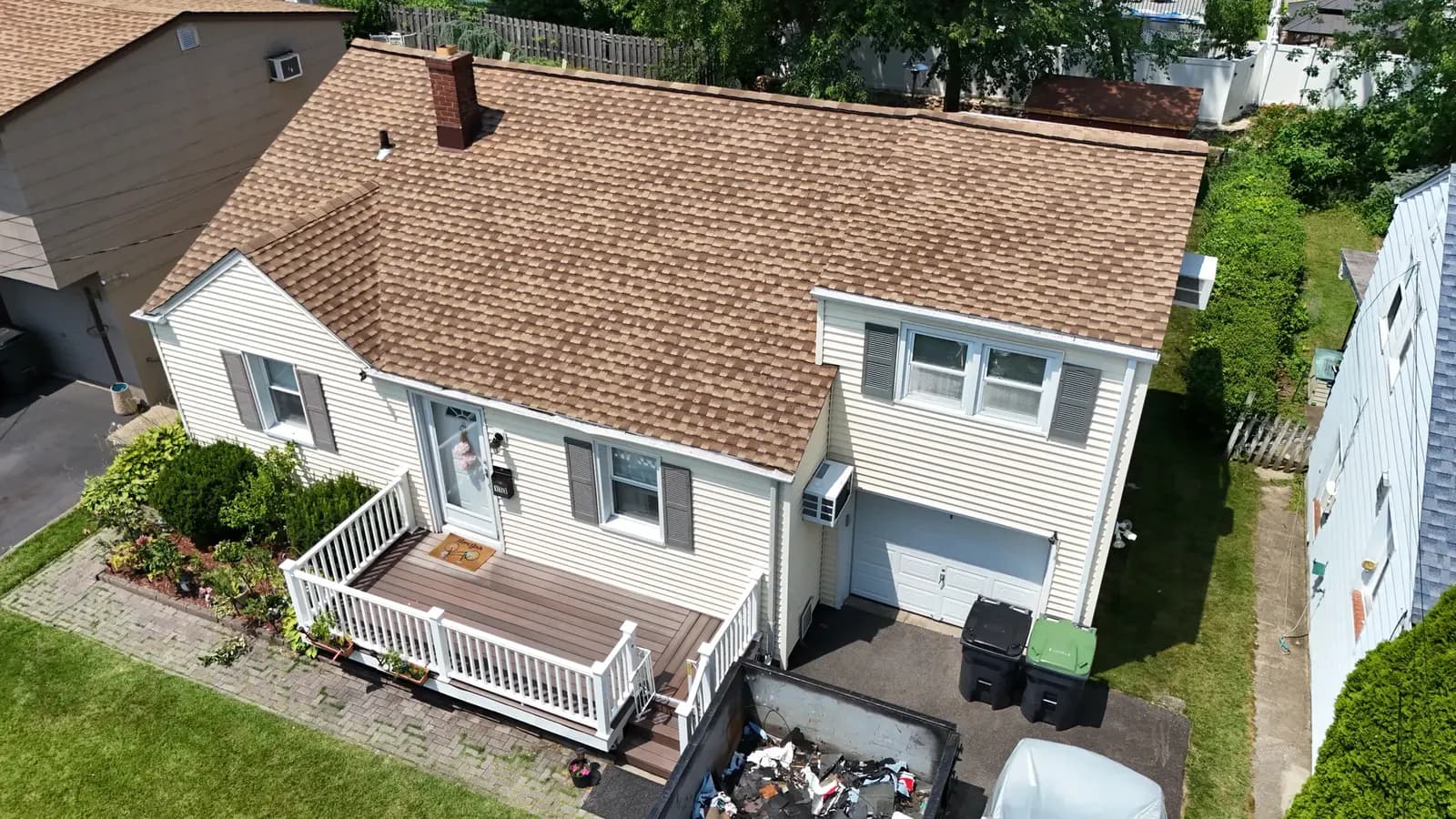
Yes, homeowners insurance in New Jersey usually pays to repair or replace a roof when a sudden, covered event damages it: a windstorm, hail, or a tree coming down on it. No, it does not pay to replace a roof that has simply worn out. How much of the bill it covers depends on two lines in your policy, whether the roof is settled at replacement cost or actual cash value, and which deductible applies.
This guide walks through what the documents say: the Insurance Information Institute’s explanations, the NJ Department of Banking and Insurance consumer guidance, and the parts of a policy that decide the outcome. It is not legal advice. Your own declarations page and loss settlement section are the final word.
Sudden Damage Versus Wear and Tear
The dividing line on almost every roof claim is between something that happened and something that wore out. According to the Insurance Information Institute, homeowners policies typically cover roof damage from a covered peril such as wind, hail or falling trees. Shingles that have curled, cracked and shed their granules over twenty New Jersey winters are not a peril. They are the expected end of a roof’s life.
In practice, an adjuster looks for evidence of a specific event: creased or torn tabs along one slope after a nor’easter, bruised mat under the granules after hail, a broken rafter under a limb. Uniform aging across every slope points the other way. If your roof is near the end of its expected service life, the roof lifespan guide explains what is normal for each material.
What a Standard Policy Names
The most common homeowners form is the HO-3. The Triple-I’s coverage overview lists fire, lightning, windstorms, hail, explosions, smoke, vandalism and theft among the perils it responds to. The same page says flood is not covered, earthquake is sold separately, and water seepage is treated as a maintenance issue rather than a loss.
The flood exclusion matters here more than people expect. When the remnants of Hurricane Ida hit in September 2021, FEMA’s disaster declaration covered Bergen, Essex, Morris, Passaic and eight other New Jersey counties. Where that damage was rising water, a homeowners policy does not pay for it. Wind that lifts shingles off a roof in Teaneck or Wayne is a separate question from water in the basement, and the two are usually handled under different policies.
Actual Cash Value Versus Replacement Cost
Once a loss is covered, the loss settlement terms decide the check. The Insurance Information Institute puts it plainly: replacement cost pays what it takes to replace the damaged item, while actual cash value pays that amount minus depreciation. Its own example is a tree that destroys a 15-year-old roof. A replacement cost policy pays for the new roof. An actual cash value policy pays a smaller percentage, because fifteen years of wear are deducted.
Roof age also affects what coverage you can buy. The Triple-I roof article notes that insurers commonly require an inspection when a roof is over 20 years old at application, and some will cover an older roof at actual cash value only, or decline it. Read the declarations page, then look for any roof surfacing endorsement or payment schedule, because that language can apply to the roof alone while the rest of the house stays at replacement cost.
| Policy term | What it pays | What to check |
|---|---|---|
| Replacement cost value (RCV) | The cost of a new roof of like kind and quality, less the deductible | Whether part of the payment is held until the work is finished |
| Actual cash value (ACV) | Replacement cost minus depreciation for age and wear, less the deductible | How the insurer calculates depreciation on your roof’s age |
| Roof payment schedule or endorsement | A share of the roof cost that falls as the roof ages | Whether it applies to all perils or only wind and hail |
| Hurricane deductible | Coverage after a percentage of the insured value is subtracted | The percentage, and what triggers it in New Jersey |
Deductibles on a New Jersey Roof Claim
Most roof claims carry the ordinary flat dollar deductible shown on the declarations page. Storms can change that. New Jersey is one of the states where insurers sell hurricane deductibles, and the Triple-I’s background paper on hurricane deductibles explains how percentage deductibles are based on a home’s insured value. It describes the New Jersey trigger as a storm designated a hurricane by the National Weather Service with sustained winds of 74 mph measured somewhere in the state.
A percentage deductible depends on the policy and the home’s insured value. Confirm the amount with your insurer before you decide what to file. The NJ Department of Banking and Insurance consumer guide tells homeowners to understand their deductibles, the portion of each covered claim they pay, before a disaster rather than after.
The deductible is yours to pay. A contractor who offers to absorb or waive it, and recovers the difference by inflating the estimate sent to the insurer, is putting false figures in front of the carrier. The step by step claim guide covers what New Jersey’s Insurance Fraud Prevention Act says about that.
Matching and Partial Repairs
A common dispute after a storm is the roof that is partly damaged. The adjuster prices two slopes, and the homeowner worries that new shingles will not match the faded ones on the other side, or that the color has been discontinued. How that is resolved depends on the wording of your policy and on how your insurer applies it. Ask your adjuster, in writing, how your policy treats matching before any work starts, and keep the reply with your claim file.
A roofer’s inspection helps here. If the shingle line is no longer made, or the existing roof cannot be repaired without damaging adjoining courses, that is a fact the adjuster can verify. DOBI’s storm claim guidance notes that it sometimes helps to have your contractor speak directly with the claim adjuster.
When a Claim Is a Bad Idea
Filing is not always the right move. Think twice when:
- The repair estimate is below your deductible, or barely above it. You pay all or nearly all of it either way, and the claim still goes on your record.
- The damage is really age. A roof at the end of its life with a few lifted shingles is likely to be denied as wear and tear.
- The problem is a slow leak at or a chimney that has been staining a ceiling for months. Gradual leaks are usually treated as maintenance.
- You are not sure of the cause. Get an inspection first so you know whether there is a storm event to report.
If you are unsure how a claim might affect your renewal, ask your agent before you file. And if the roof needs replacing regardless, the New Jersey roof cost guide sets out what drives the price, and the financing page explains the options for paying for it.
How Future Remodeling Handles This
Future Remodeling is FHRG LLC, 37A Woodbine St, Bergenfield, NJ 07621, (201) 371-5515, New Jersey home improvement contractor license 13VH13329600. We work across New Jersey and Westchester County, NY, with Bergen County the largest share; the service areas page lists the towns.
We are a GAF and FORTIFIED Certified (IBHS) roofing contractor, and Future Remodeling installs GAF Timberline HDZ® and UHDZ asphalt shingles and GAF TimberSteel™ and Drexel metal roofs. To book a free in-home estimate, use the link below. Whoever you hire, ask for a written, itemized estimate you can put next to the adjuster’s figures. A contractor does not decide coverage; your insurer does. See the roofing page for the full service.
Frequently Asked Questions
Will insurance replace a roof just because it is old?
No. Age and gradual wear are maintenance, not a sudden loss. A policy responds to a covered event such as wind, hail or a falling tree. An older roof can still be paid for when a covered storm damages it, but under actual cash value terms the payment shrinks as the roof ages.
Does insurance pay to replace the whole roof or just the damaged part?
It depends on the extent of the damage and on your policy wording. Adjusters often price a repair of the damaged slopes. Whether undamaged sections must be replaced so the roof matches is a question for your adjuster and your policy, so ask for the answer in writing.
Is flood damage covered by a homeowners policy in New Jersey?
Generally not. The NJ Department of Banking and Insurance notes that most homeowners policies do not cover flood, which is written separately through the National Flood Insurance Program. Wind-driven damage to the roof itself is a different peril from rising water.
Should I call my insurer or a roofer first?
Report the claim to your insurer promptly, and have a roofer inspect so you know what is actually damaged. A contractor estimate gives you something to compare with the adjuster’s figures. Do not sign a repair contract before the adjuster has seen the damage.
Recap
- Insurance covers sudden, covered damage, not a roof that wore out.
- Replacement cost pays for a new roof; actual cash value deducts depreciation.
- Check which deductible applies, including any hurricane percentage.
- Flood is a separate policy; wind damage to the roof is not flood.
- Ask your adjuster in writing about matching and partial repairs.
If a storm has been through and you want to know what is actually wrong with your roof before you call your insurer, get a free estimate.