How to File a Roof Insurance Claim in NJ: Step by Step
Report fast, photograph everything, make temporary repairs, meet the adjuster. The NJ claim steps, deadlines and what a contractor may not do.
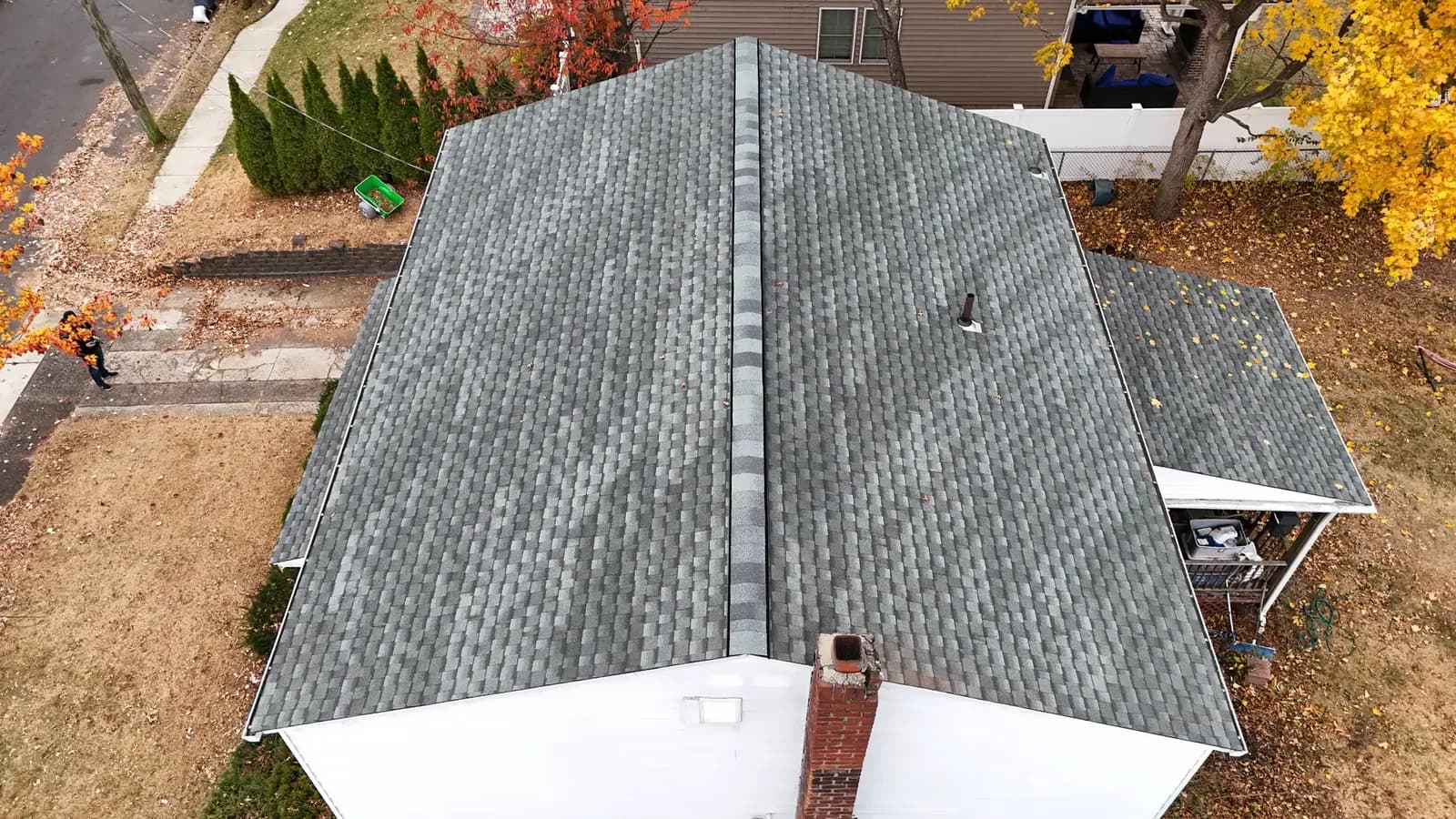
To file a roof insurance claim in New Jersey: make the house safe and cover any openings, photograph the damage, report the loss to your insurer and write down the claim number, get a roofer’s inspection and written estimate, meet the adjuster, and compare the two estimates before you sign anything. Under New Jersey’s claim handling rules the insurer has 10 working days to acknowledge your claim and, once it has your signed proof of loss, 30 days to pay or explain in writing why it has not.
Below is each step in order, the paperwork that makes a claim go smoothly, and the lines a contractor in New Jersey must not cross. Whether your loss is covered at all is a separate question, answered in does homeowners insurance cover roof replacement. None of this is legal advice; it describes what the regulations and DOBI guidance say.
Before You Call Anyone
Stay off the roof. Wet shingles after a storm are slick, and a limb resting on a ridge can shift. Look from the ground and from the attic with a flashlight: daylight through the deck, wet insulation, or a fresh stain on a ceiling tells you water is getting in.
Then pull out your policy, or log in to your insurer’s portal, and find three things: the deductible shown on the declarations page, whether there is a separate wind or hurricane deductible, and the section headed duties after loss. That section lists what the insurer expects from you, and it is the checklist the rest of this guide follows.
The Claim, Step by Step
Step 1: Protect the property
The NJ Department of Banking and Insurance storm claim guidance says to make the temporary repairs needed to protect the property from further damage and to save every receipt. On a roof that means a tarp over the opening, secured over the ridge rather than nailed through good shingles, and buckets under active drips.
Step 2: Document before anything is moved
Take wide photos of each side of the house, then close-ups of the damage, then the interior stains. Date-stamped phone photos are fine. DOBI recommends photographing damaged property before disposing of it and keeping it until the insurer inspects or says it can go, because in most cases the company will want to see it.
Step 3: Report the loss
Call your agent or insurer as soon as possible. Have the policy number ready, and write down the claim number and the name and phone number of the claim representative. Keep a running log of every call: date, who you spoke with, what was said.
Step 4: Get an independent inspection
Have a roofer inspect and give you a written estimate. You want your own record of what is damaged, measured by someone who will be on the roof, before the adjuster arrives. The DOBI consumer guide to insurance and natural disasters also says to insist on a written estimate before repairs begin and not to sign any contract before the adjuster has examined the damage.
Step 5: Meet the adjuster
Be home for the inspection and, if you can, have your contractor there too. DOBI says you should cooperate with the adjuster and keep written notes of your conversations. Walk the adjuster to every stain and every slope you photographed. Ask what was measured and what was not.
Step 6: Compare the estimates
The insurer should give you a copy of its damage estimate. Line it up against your roofer’s. Common gaps are the number of squares, starter and , at the eaves, , and at walls and chimneys. If the policy pays replacement cost, ask whether any amount is held back until the work is done and what paperwork releases it.
Step 7: Sign a written contract and schedule the work
In New Jersey a home improvement contract over $500 must be in writing and signed by all parties, and any change to it must also be in writing, under N.J.A.C. 13:45A-16.2. Replacing the existing roof covering on a detached one or two family house is listed as ordinary maintenance under N.J.A.C. 5:23-2.7, which requires no permit, inspection or notice for that category of work.
Your Documentation Checklist
| Document | Why it matters |
|---|---|
| Date and description of the storm | Ties the damage to a specific event rather than to age |
| Exterior and interior photos, wide and close | Shows the extent before temporary repairs change the scene |
| Receipts for tarps, labor and supplies | Temporary repairs are part of the claim |
| Claim number and call log | Keeps names, dates and promises on record |
| Contractor’s written estimate | Gives you a line by line comparison with the adjuster |
| Insurer’s estimate and any denial letter | The insurer must explain any part of the loss it says is excluded |
| Hotel and meal receipts if you had to leave | Some policies cover additional living expense after a covered loss |
New Jersey Claim Timelines
New Jersey’s unfair claims settlement rules put clocks on the insurer. Under N.J.A.C. 11:2-17.6, it must acknowledge notice of a claim within 10 working days and promptly provide claim forms, instructions and reasonable assistance. Under N.J.A.C. 11:2-17.7, a first party claim like a homeowner’s roof claim is to be paid within 30 calendar days of the insurer receiving properly executed proofs of loss. If it cannot settle in that time, it must send written notice, then an update within 45 days and every 45 days after that until the claim is paid or denied.
The 30 days start from the signed proof of loss, not from your first phone call, so ask when the insurer will send the form and return it promptly.
What a Contractor Can and Cannot Do
A roofer can inspect, measure, photograph, write an estimate, meet the adjuster, and point out damage or code items the adjuster missed. DOBI notes that it sometimes helps to have your contractor speak directly with the claim adjuster. A roofer can also document hidden damage found during so you can take it back to the insurer.
Negotiating your settlement for a fee is different work. In New Jersey that is the role of a public adjuster, a professional DOBI licenses, who is typically paid a percentage of the settlement. DOBI’s storm guidance notes that you do not need one to file or resolve a claim.
The hard line is the deductible. A contractor who promises to waive or cover it, and makes up the difference with a padded estimate, is presenting a false price to the insurer. N.J.S.A. 17:33A-4, part of the New Jersey Insurance Fraud Prevention Act, says a person violates the Act by presenting, or preparing, a written or oral statement in support of a claim knowing it contains false or misleading information material to the claim. Under 17:33A-5, as quoted in a 2023 DOBI enforcement judgment, civil penalties for a violation of that section run up to $5,000 for a first violation, up to $10,000 for a second, and up to $15,000 for each later one. The section is written to reach whoever presents or prepares such a statement, which describes the homeowner who submits a padded estimate as well as the contractor who wrote it.
DOBI also warns against paying a contractor the full amount up front or signing over your insurance settlement payment. A deposit at signing and the balance on completion is the pattern it describes.
If You Disagree With the Adjuster
Start with the insurer: ask for the reasoning in writing and send your contractor’s estimate and photos. If all or part of the loss is denied, DOBI says the company must explain how coverage is excluded under your policy. If that does not resolve it, the Department’s Consumer Hotline is 1-800-446-7467, weekdays 8:30 am to 5:00 pm, and you can file an inquiry or complaint through the DOBI website.
How Future Remodeling Handles This
Future Remodeling (FHRG LLC, 37A Woodbine St, Bergenfield, NJ 07621, (201) 371-5515) is a licensed New Jersey home improvement contractor, license 13VH13329600, and a GAF roofing contractor. We work in New Jersey and Westchester County, NY; see the service areas for towns from Englewood and Fort Lee to Montclair and Morristown.
You can book a free in-home estimate for asphalt shingle roofing or the other systems on our roofing page. Whichever contractor you choose, ask them to be there for the adjuster visit; many will. Keep the deductible as your own share, and make sure the estimate the insurer sees shows the real price.
Frequently Asked Questions
How long do I have to file a roof claim in New Jersey?
Your policy sets the notice requirement, usually in the conditions section under duties after loss. The NJ Department of Banking and Insurance advises reporting a loss as soon as possible. Waiting makes it harder to tie the damage to a specific storm.
Do I have to use the contractor my insurer recommends?
No. DOBI’s storm guidance says the insurer should give you a copy of its damage estimate and, if you ask, the name of a contractor who will do the work at that price, but you are not required to use that contractor.
Can a roofer pay or waive my deductible?
Submitting a knowingly false or misleading claim to hide a deductible discount can violate New Jersey’s Insurance Fraud Prevention Act, which treats knowingly false or misleading statements material to a claim as a violation. The safe course is a contract price the insurer can see, with the deductible paid by the homeowner as the policy describes.
What if the roofer finds more damage after the old roof comes off?
Rotted or broken decking often shows up only after tear-off. DOBI’s consumer guide says that if a contractor finds hidden damage the adjuster did not see, you should contact your insurer to resolve the difference. Photograph it before it is covered up.
Recap
- Protect the property and keep receipts.
- Photograph everything before it is moved or repaired.
- Report the loss and log every call.
- Get your own inspection and written estimate.
- Meet the adjuster, then compare estimates line by line.
- Sign a written contract only after the adjuster has seen the damage.
If you need an inspection after a storm, get a free estimate, or read the roof lifespan guide to see where your roof stands.