12 Signs You Need a New Roof (NJ Edition)
Age, bald shingles, curling, sagging, daylight in the attic and repeat leaks. Twelve signs a NJ roof is due, and four that look bad but are not.
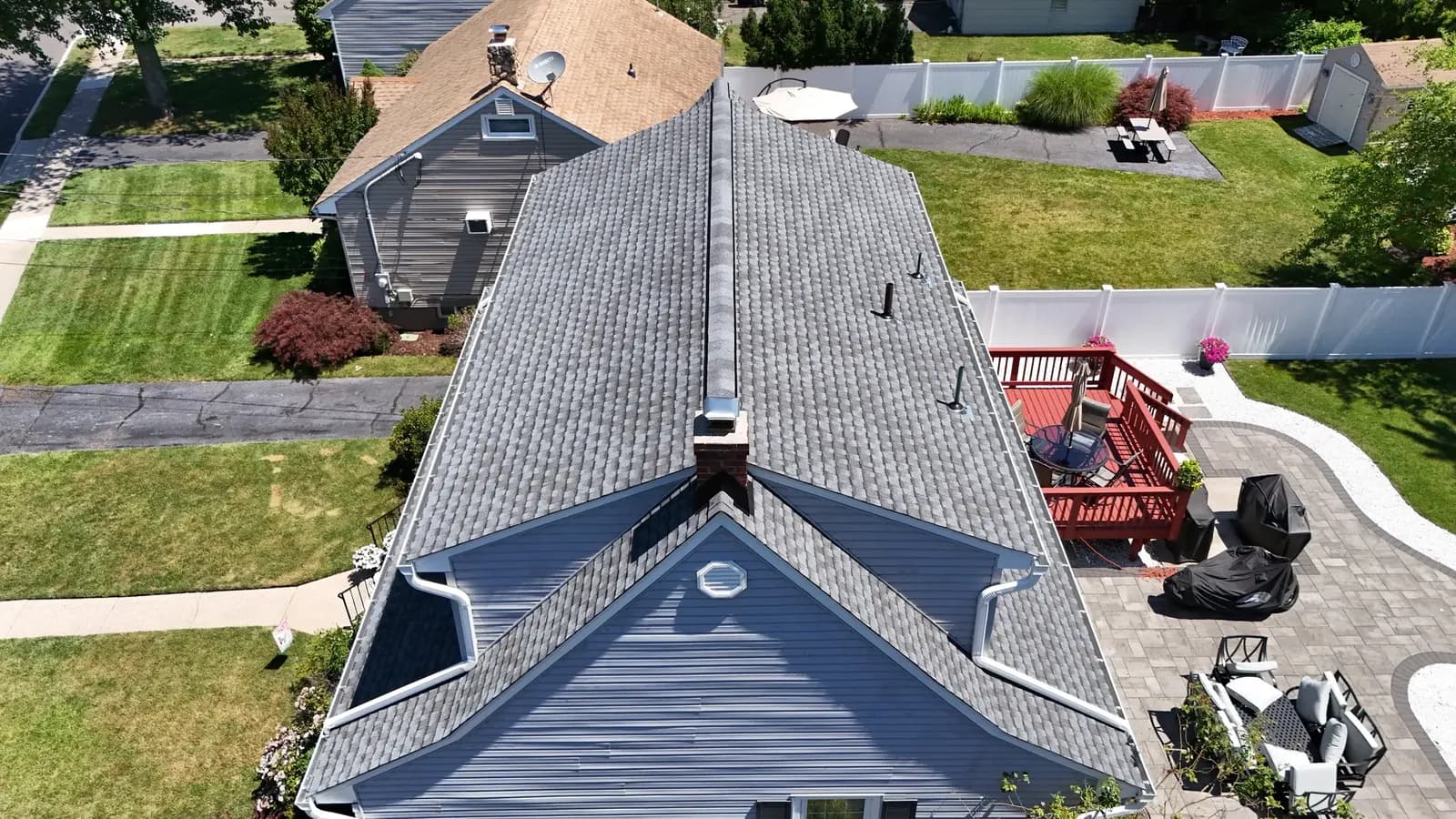
You likely need a new roof when it is near the end of its expected life (about 20 years for 3-tab asphalt and 30 for architectural shingles, per InterNACHI) and you also see wear spread across the roof: bald or curling shingles, a sagging line, daylight or wet wood in the attic, or leaks that come back after repairs. One sign alone usually means a repair. Several together usually mean the roof is done.
Here are the twelve signs worth knowing, what each one looks like on a New Jersey house, and what it actually tells you. After that, four things that alarm homeowners but do not, by themselves, call for a new roof.
The 12 Signs
1. The roof is near the end of its life
Looks like: a house you bought 15 years ago with a roof that was not new then. Means: start watching closely. InterNACHI gives about 20 years for 3-tab, 30 for architectural shingles and 25 for wood. Age is not damage, but it changes how you read every other sign on this list. Our guide to how long roofs last in NJ explains why our winters and summers push asphalt toward the low end.
2. Bald patches and granules in the gutters
Looks like: coarse, sand-like grit piling at outlets, and shingles that look smooth and dark in patches. Means: the granules shield the asphalt from sunlight. Once they wash away in quantity, the shingle underneath dries out and cracks faster.
3. Curling or cupped shingles
Looks like: tab edges turning up (cupping) or tab centers bulging with corners down (clawing), easy to spot in low evening light. Means: the shingles have lost flexibility. Curled tabs catch wind and let driven rain under, which matters in a nor’easter.
4. Cracked or missing shingles in many places
Looks like: tabs missing after every windy week, or cracks running across shingles on several slopes. Means: one blown-off tab is a repair. Tabs lost in many places mean the sealant strips have let go across the roof.
5. A sagging roofline
Looks like: a ridge that dips or a visible belly between rafters.Means: the decking or supporting structure needs assessment. The affected area, access and condition of the framing determine the repair scope. Your project consultant gives an exact written estimate at the free inspection and explains whether replacement also needs to be considered.
6. Daylight through the roof boards
Looks like: pinpoints of light in the attic on a sunny day, away from the . Means: if light gets in, water can. On older homes with plank , gaps between boards are normal, but light coming through the roofing itself is not.
7. Stains on ceilings or attic sheathing
Looks like: brown rings on an upstairs ceiling, or dark streaks running down the underside of the . Means: water has been getting in, possibly for a while. The EPA’s guide to mold and moisture notes that if damp materials are dried within 24 to 48 hours of a leak, in most cases mold will not grow, so do not let a fresh stain sit.
8. Wet insulation or mold in the attic
Looks like: matted, damp insulation near the eaves, or a fuzzy growth on the rafters. Means: the Department of Energy’s guide to durable attics lists wet insulation near the eaves, mold or mildew on attic surfaces, and warped or rotting wood as signs of moisture entering the attic. The cause can be a roof leak or poor , and a replacement is the time to fix both.
9. Worn or warped shingles at the eaves
Looks like: the bottom few courses look rougher or wavier than the rest, sometimes with stained below. Means: the same DOE guide lists worn or warped shingles at roof edges among its warning signs. In New Jersey that edge is where form, and the guide notes they can push water under shingles and into the house.
10. Leaks that keep coming back
Looks like: a ceiling patched twice, or a new leak each spring in a different room. Means: the problem is the roof, not one detail. Our roof repair cost guide shows how quickly repeat visits add up.
11. There are already two layers
Looks like: two stacked shingle edges at the gutter line. Means: under the model reroofing rule that New Jersey’s adopted residential code follows, as NRCA’s Professional Roofing explains, a roof with two or more layers cannot be covered again. The next roof is a full , and a second layer adds weight the framing carries every winter under snow.
12. The neighbors are reroofing
Looks like: dumpsters on your street in a development where every house went up the same year. Means: roofs of the same age, material and exposure tend to wear out together. It is not damage, but it is a good prompt to get yours inspected.
Signs at a Glance
| Sign | Where to look | Urgency |
|---|---|---|
| Sagging roofline | From the street | Soon |
| Active ceiling stain or wet insulation | Upstairs ceilings, attic | Now |
| Daylight through the roofing | Attic, sunny day | Soon |
| Curling, bald patches, granules | Ground, binoculars, gutters | Plan within a season or two |
| Repeat leaks, two layers, roof near end of life | Your records, gutter edge | Plan a replacement |
What Does Not Mean You Need a New Roof
- Black streaks. The Asphalt Roofing Manufacturers Association identifies dark streaks on many roofs as algae, mostly Gloeocapsa magma, common along the Eastern Seaboard. It is a discoloration, and ARMA warns against power washing it, which damages shingles.
- A few granules on a new roof. A new roof sheds some loose granules at first. Heavy loss on an old roof is the sign, not a sprinkle on a new one.
- One missing shingle after a storm. That is a repair, usually a small one.
- A single leak at a pipe or chimney. Vent boots and fail on their own schedule and are replaced on their own.
When to Replace Your Roof
Replace the roof when age and spread-out wear show up together, or when structural signs such as sagging or soft decking appear. Do it before the next winter if you can: a roof that is merely tired in October can be leaking by February. If you are weighing it, our repair or replace guide lays out the decision, and the new roof cost guide gives the New Jersey price range.
Future Remodeling Roofing and Skylights
Future Remodeling (FHRG LLC, Bergenfield, NJ, #13VH13329600) offers a free in-home estimate. When you book any roof estimate, ask whether it includes a look in the attic, since several of the signs above only show from inside. We are a GAF contractor and a VELUX® Certified Installer, so old skylights can be replaced in the same project as the roof; see skylights. Roofing options are on the roofing page and the asphalt shingle page, and our coverage across New Jersey and Westchester County is on service areas.
Frequently Asked Questions
When is the best time of year to replace a roof in NJ?
Late spring through fall gives shingles the warmth they need to seal down. Roofs are replaced in winter too, with extra hand sealing, but if your roof is due and not leaking, booking it for the warmer months is the easier path.
How often should I have my roof inspected?
Look at it yourself from the ground every spring and fall, and after any major storm. Once a roof passes about two thirds of its expected life, a professional inspection each year or two is sensible.
Can I tell a roof needs replacing from the ground?
Many signs show from the ground with binoculars: curling, bald patches, missing tabs and a dipping ridge. The attic tells you the rest. Do not climb onto the roof to look; the Asphalt Roofing Manufacturers Association recommends leaving roof work to trained professionals.
Does a leak always mean a new roof?
No. Most single leaks come from a detail such as a vent boot, a flashing or a few damaged shingles, and those are repairs. Leaks from several places on an old roof are what point to replacement.
Summary
A roof is due when it is old and the wear is everywhere: granule loss, curling, cracked and missing tabs, repeat leaks, moisture in the attic or a sagging line. Algae streaks, a single missing shingle or one leaking boot are not reasons on their own. If you are seeing more than one of the twelve, get a free estimate and have someone look before winter.