Repair or Replace Your Roof? How to Decide in NJ
Repair a sound roof with one failed detail. Replace one near the end of its life with repeat leaks or widespread wear. The NJ rules of thumb.
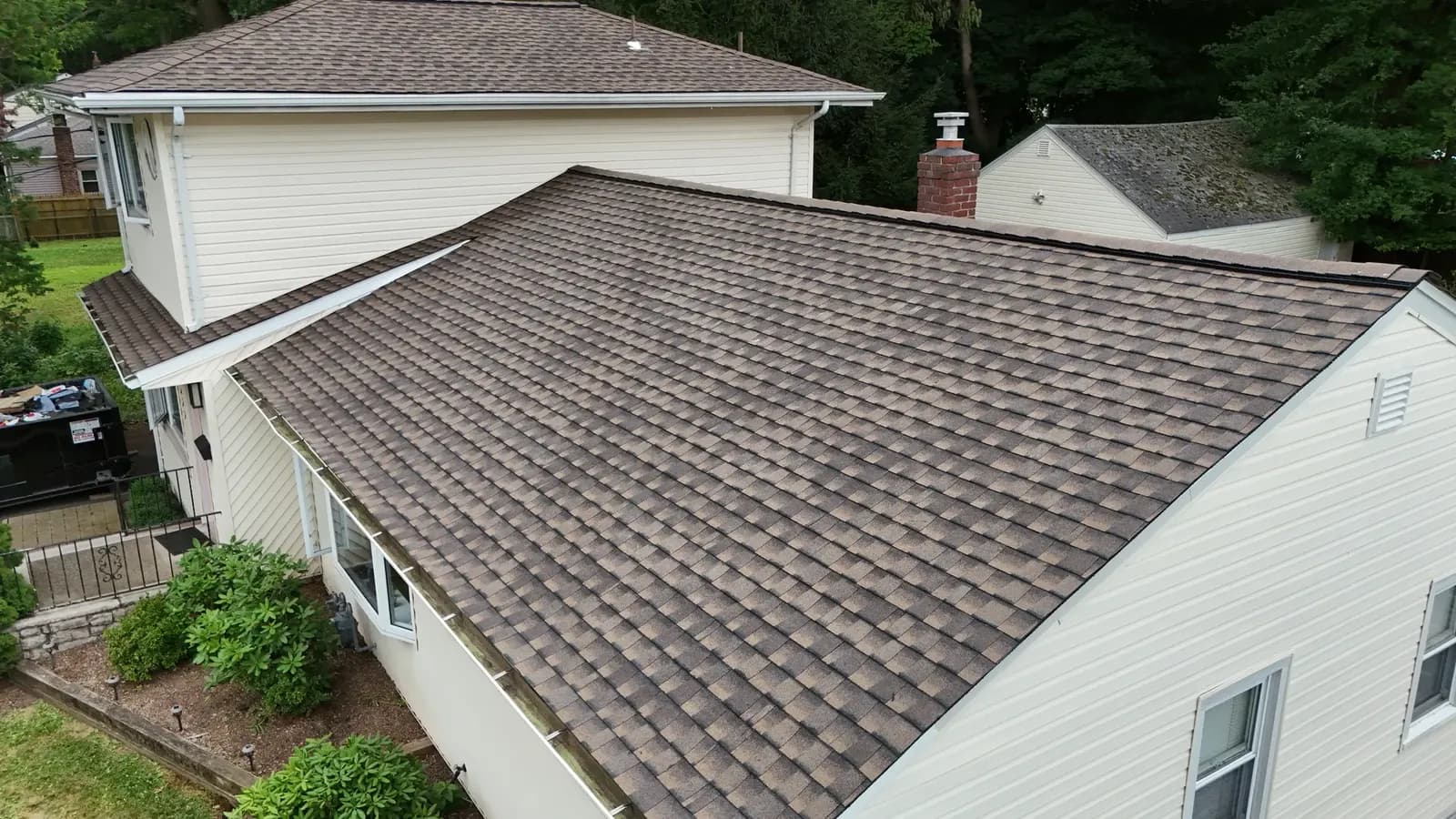
Repair can make sense when the roof has useful life remaining and damage is limited to a , vent boot or isolated shingles. Replacement deserves a closer look when an aging roof has repeated leaks or widespread wear. Existing layers and soft decking affect either scope. Your project consultant assesses those conditions at the free inspection and gives an exact written estimate.
The rest of this guide turns that into five questions you can answer yourself, plus the New Jersey details that tip close calls.
The Five Questions That Decide It
1. How old is the roof?
Age is the first filter. InterNACHI’s life expectancy chart gives about 20 years for 3-tab asphalt, 30 for architectural asphalt, 40 to 80 for metal and 60 to 150 for slate. If your roof has used up most of that, every repair is buying time on a roof that will be replaced soon regardless. If you do not know the age, the closing papers, the town’s permit history for older work, or a date written on the attic side of the can tell you. Our guide to how long roofs last in NJ goes material by material.
2. How much of the roof is affected?
One leak at a chimney is a detail problem. Curling, cracking and granule loss across a whole south-facing slope is a roof problem. A repair fixes a point; it cannot reverse weathering that has happened everywhere at once.
3. How many layers are there?
Look at the edge of the roof at the gutter, or lift a shingle at the rake. If you see two sets of shingle edges, there are two layers. New Jersey’s residential code is the International Residential Code, NJ edition, and the model-code reroofing rule, summarized by NRCA’s Professional Roofing, does not allow re-covering a roof that already has two or more layers. A two-layer roof can still be repaired, but its next replacement has to be a full , which belongs in your math.
4. Is the decking sound?
Soft spots, sagging between rafters and stained sheathing point to moisture damage. Isolated rot may be addressed during a repair, while widespread damage requires a broader assessment. The proposal should explain how damaged decking will be documented and any additional work approved.
5. What does the repair cost against a new roof?
Compare a repair proposal with a replacement proposal for the same house. Consider how much sound roofing remains, the extent of hidden damage and previous repairs. A patch on a worn-out roof may leave other failing areas untouched, so ask what each option is expected to resolve.
Repair or Replace at a Glance
| What you have | Usual answer | Why |
|---|---|---|
| A few shingles blown off a 10-year-old roof | Repair | Sound roof, one-time damage |
| Leak at a cracked vent boot | Repair | Boots wear out before shingles do |
| Chimney or wall flashing leak | Repair | Detail failure, fixable on its own |
| Granule loss and curling on one slope, roof near end of life | Replace | Wear is general, not local |
| Leaks in several places at once | Replace | Points to a roof-wide failure |
| Two layers on an aging roof with new problems | Lean toward replace | Repairable, but the next roof must be a tear-off |
| Soft decking in several areas on an older roof | Lean toward replace | Isolated rot is repairable; widespread rot means long-term moisture |
When a Repair Is the Right Call
A lot of storm damage needs a repair, not a roof. A gust that lifts a course of shingles on a sound 8-year-old roof, a squirrel that chews a pipe boot, a satellite dish mount that was never sealed: these are fixed in a visit, and replacing the roof for them would be poor value. Our roof repair cost guide for NJ explains the scope and cost drivers for common repairs.
When Replacement Is the Better Money
Replacement wins when the problems are spread out and the roof is old. The warning signs are visible from the ground and the attic: bald patches where granules are gone, curled or cupped tabs, daylight through the boards, a ridge that dips. Our list of 12 signs you need a new roof shows what each looks like. If several apply, put the repair money toward the new roof. The new roof cost guide covers the range by material, and the cost per square guide explains how bids are built.
The NJ Factors People Forget
- Freeze and thaw. Water that gets under a lifted shingle in December freezes, expands and opens the gap further. A small defect in fall can be a bigger one by March.
- . The U.S. Department of Energy’s guide to durable attics lists ice dams in gutters causing water to seep under shingles among the signs of moisture trouble. If your house dams every winter, a replacement lets the eaves get and lets the be corrected at the same time.
- Permits. Under N.J.A.C. 5:23-2.7, repairing or replacing the roof covering on a detached one- or two-family home is ordinary maintenance with no permit application. Structural work is not, so a repair that turns into new rafters goes through the local construction official.
- Shade and trees. Older neighborhoods in Teaneck, Montclair and West Orange have mature oaks over many roofs. Shaded slopes stay damp and grow moss, and the debris clogs valleys, which wears one area out faster than the rest.
Future Remodeling and Roof Decisions
Future Remodeling (FHRG LLC, 37A Woodbine St, Bergenfield, NJ 07621, (201) 371-5515, #13VH13329600) offers a free in-home estimate. Whoever you ask, a good proposal should say plainly whether a repair will do the job, and if it recommends replacement, it should show why. We are a GAF contractor and work across New Jersey and Westchester County, NY; see service areas. Replacement options are on the roofing page, with asphalt detail on the asphalt shingle page.
Frequently Asked Questions
Can I replace just one side of my roof?
You can, and it sometimes makes sense when one slope takes the weather and the other is shaded and sound. Expect a visible color difference at the ridge, and expect the older side to need its own replacement sooner. Ask for the price of each slope and of the whole roof before choosing.
Is it worth repairing a 20-year-old roof?
It depends on the shingle. A 20-year-old architectural roof in good shape can be worth a modest repair, because InterNACHI puts that material near 30 years. A 20-year-old 3-tab roof is at the end of its expected life, so a large repair is hard to justify.
Will a new roof stop ice dams?
Not on its own. Ice dams come from attic heat melting snow, so the cure is air sealing, insulation and ventilation. A replacement is the right time to add ice and water barrier at the eaves and fix ventilation, which is part of why replacement can beat a repair on a house with a history of ice dams.
Bottom Line
Repair a roof that is young, mostly sound and failing at one point. Replace a roof that is near the end of its expected life and failing in several places. Two layers or soft decking can still be repaired, but on an aging roof they weigh toward replacement. When it is a close call, compare the repair against the new roof and add up what you have already spent. For a straight answer on your own roof, get a free estimate.