Gutter Elbows: A and B Elbows, Angles and Sizes
An A elbow turns water out from the wall and a B elbow turns it sideways. Angles, 2x3 and 3x4 sizes, offsets, and the order the pieces go in.
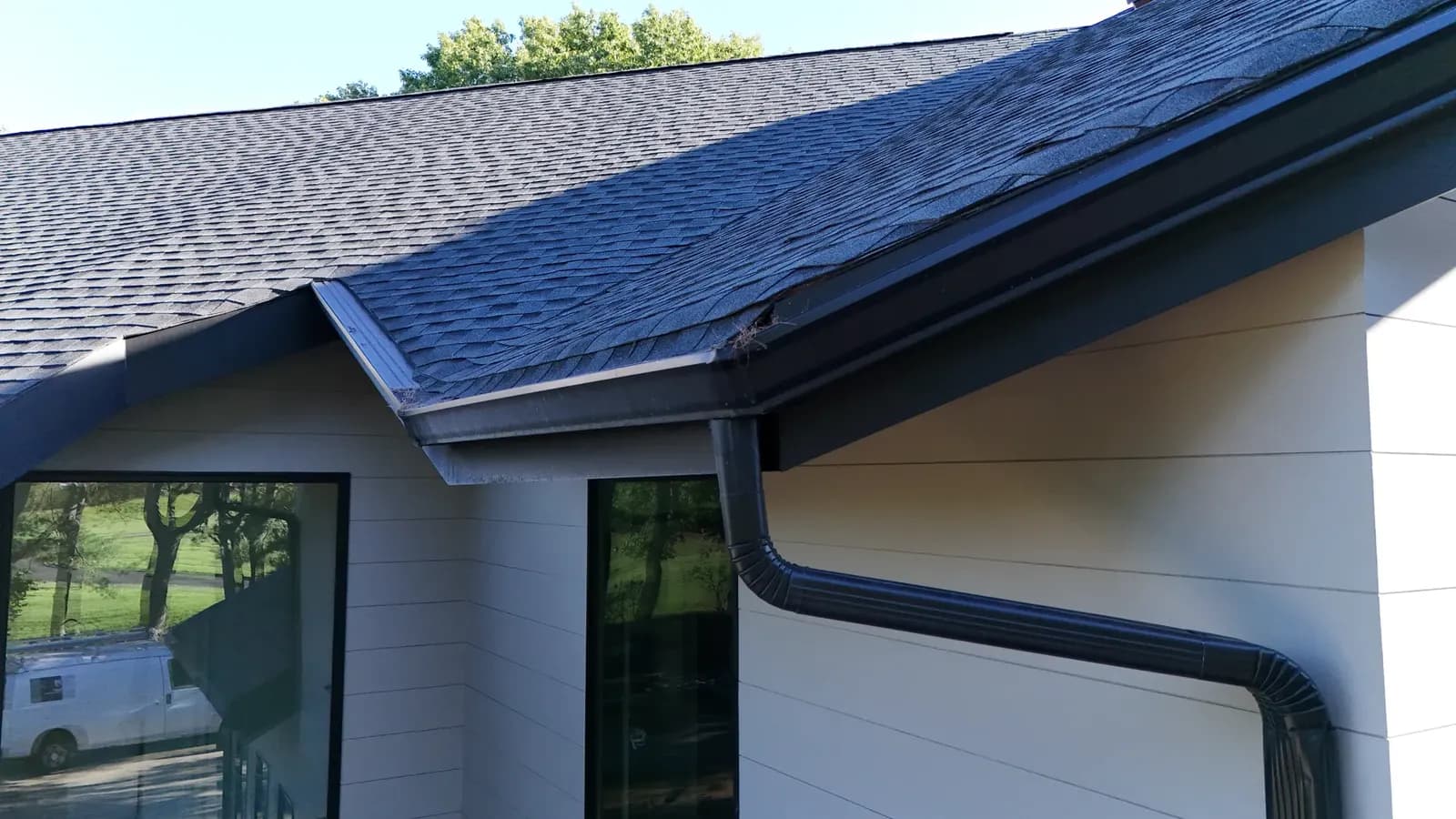
An A elbow bends front to back, turning water out toward the yard or back toward the wall. A B elbow bends side to side, turning water left or right along the wall. The standard bend is 75 degrees, and elbows come in the same sizes as , most often 2x3 inch, which This Old House says handles about 600 square feet of roof, and 3x4 inch, which handles up to 1,200. A typical downspout runs A elbow, B elbow if needed, then a final A elbow and an extension at the ground.
This guide covers how to tell the two elbow types apart, which angle to use, how to size them, and how to assemble a run so it does not leak or clog.
A Elbows and B Elbows
Rectangular downspouts have a wide face and a narrow side, and the letter tells you which way the elbow bends relative to them. Spectra Metals describes its 2x3 A-style elbow as designed to move rainwater away from the house, and its 2x3 B-style elbow as designed to move it along the side of the house. Retailers often label them front elbows and side elbows for the same reason.
An easy way to remember it: an A elbow bends across the narrow dimension, so it kicks out from the wall or back toward it. A B elbow bends across the wide dimension, so it swings sideways. Most runs use A elbows at the top and bottom. B elbows appear when the downspout has to step around a window, a hose bib, or a corner trim board.
The elbow is one of a dozen parts in a gutter system; the parent guide to what each gutter part is called names the rest.
Elbow Angles
Parts supplier GutterAll notes that a 75 degree elbow is commonly used for standard downspout transitions and kick-outs, and that 30, 45, 60, 75 and 90 degree elbows cover gentle transitions, standard turns and tighter routing. In practice:
- 75 degrees is the default for the top and bottom of a downspout. It turns the water firmly without a hard stop.
- 45 degrees and shallower suit gentle jogs, such as stepping a downspout past a belt course or a change in siding plane.
- 90 degrees makes the tightest turn, useful where clearance is short, at the cost of more turbulence and more places for debris to stop.
Round downspouts, usual with , use round elbows that are not lettered A or B, because a round pipe bends the same way in every direction.
Downspout and Elbow Sizes
The elbow must match the downspout, and the downspout must match the roof. This Old House gives the rough capacities: about 600 square feet of drainage area for a 2x3 inch downspout and up to 1,200 for a 3x4. It also notes that gutter runs of 60 feet or more should have at least two outlets.
| Size | Roof area per downspout | Usually paired with | Clog risk at elbows |
|---|---|---|---|
| 2x3 inch rectangular | About 600 sq ft | 5 inch K-style | Higher, especially in offsets |
| 3x4 inch rectangular | Up to about 1,200 sq ft | 6 inch K-style, or 5 inch under heavy trees | Lower |
| Round | Depends on diameter | Half-round gutters | Depends on diameter and bends |
Elbow size and orientation must match the downspout and drainage layout. The capacity figures are national rules of thumb, so a steep roof or a valley that drains into one corner may need a larger downspout. TheK-style gutter page andhalf-round gutter page show matching systems. Your project consultant assesses the layout, fittings and access at the free inspection and gives an exact written estimate.
Offsets Around the Eave
Most gutters hang out from the wall by the depth of the eave overhang, so the downspout cannot drop straight down. An offset brings it back to the wall: an A elbow at the outlet turning in toward the house, a short length of downspout cut to fit, and a second A elbow turning straight down again.
The short piece between those two elbows is the part to measure carefully. Too long and the downspout sits off the wall; too short and the elbows bind. On a two-story colonial in Wayne or Fort Lee with a deep overhang, that piece can be a foot or more. On a ranch with a tight eave, the two elbows may connect directly.
The Sequence From Outlet to Ground
- Drop outlet in the bottom of the gutter.
- A elbow turning back toward the wall.
- Short offset piece, if the eave needs one.
- A elbow turning straight down.
- Downspout, fastened to the wall with straps.
- B elbows, only if the run must step sideways around something.
- Bottom A elbow turning out toward the yard.
- Extension or splash block carrying water away from the foundation.
Each joint goes together with the crimped end pointing down. GutterAll’s 2x3 downspout listing puts it simply: the crimped end should face downward to shed water. Fasten each joint with a short screw or rivet on the sides, not the front, so it stays tight and looks clean.
The last elbow is not the end of the job.InterNACHI recommends an extension or splash block to carry runoff away from the foundation. The discharge route, ground slope and attachment details affect the work. Ourguide to splash blocks covers placement.
Elbows in a New Jersey Winter
Elbows are where downspouts clog, and a clogged downspout in winter fills with ice. The Office of the New Jersey State Climatologist reports 40 to 50 inches of average annual snowfall in the northern zone, and oak and maple leaves come down just before it. Leaves that lodge in the top offset in November hold meltwater that freezes, splits seams and backs the gutter up into an .
Fewer bends, larger downspouts under heavy tree cover, and a clean-out before the first freeze prevent most of it. Replacing elbows and downspouts is ordinary maintenance in New Jersey under N.J.A.C. 5:23-2.7, which covers exterior gutters and leaders, so no permit is needed.
How Future Remodeling Handles This
Future Remodeling installs seamless and half-round gutters. When comparing estimates from any installer, ask what downspout size each corner gets and how the elbows and extensions will be routed. See the gutters page and, for a full replacement, seamless gutter installation in NJ.
FHRG LLC, 37A Woodbine St, Bergenfield, NJ 07621, (201) 371-5515, #13VH13329600, serves New Jersey and Westchester County, NY. The service areas page lists the towns.
Frequently Asked Questions
Is a 90 degree gutter elbow really 90 degrees?
Often not. In the trade, the standard elbow is a 75 degree bend, and many people call it a 90 out of habit. True 90 degree elbows exist but make a sharper turn that slows water and catches more debris.
Can I use a 3x4 elbow on a 2x3 downspout?
No. The elbow has to match the downspout size exactly. A 3x4 elbow will not seal on a 2x3 downspout, and a reducer at the bottom of a run throws away the capacity you paid for at the top.
Why does my downspout elbow keep clogging?
Elbows are where leaves and shingle grit stop, especially in the tight bends of a 2x3 offset under the eave. Moving to 3x4 downspouts, cutting the number of bends, or fitting a guard at the outlet are the common fixes.
Which way does the crimped end of an elbow go?
Down, into the next piece. Each upper piece slides inside the one below it, like shingles, so water running down the inside never meets an open joint facing upward.
Recap
- A elbows bend out from or back to the wall; B elbows bend sideways.
- 75 degrees is the standard bend; 45 and 90 handle gentler and tighter turns.
- 2x3 downspouts serve about 600 square feet of roof, 3x4 up to about 1,200.
- Assemble A, offset, A, downspout, any B elbows, A, then an extension.
- Crimped ends point down, and fewer bends mean fewer clogs.
If your downspouts overflow or clog every fall, get a free estimate.