Gutter Splash Blocks: What They Do and How to Place Them
A splash block spreads water away from the foundation. Where to place one, how to slope it, and when an extension or drain works better.
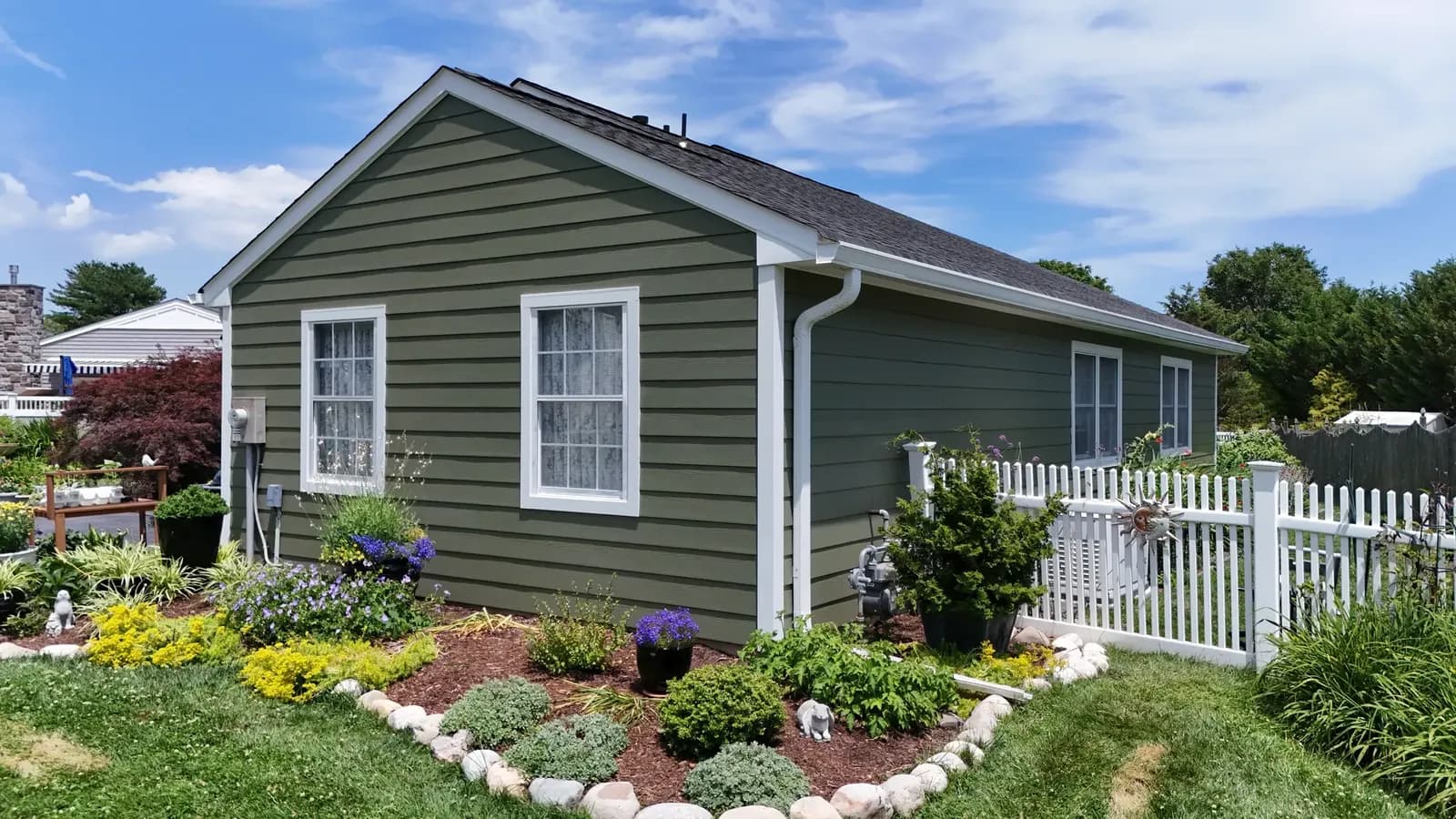
A gutter splash block is a shallow, sloped tray that sits under the bottom elbow of a downspout and spreads the water away from the foundation instead of letting it dig a hole beside the wall. Place it with the closed end under the elbow and the open end pointing downhill, on ground that falls at least 6 inches in the first 10 feet from the house, the minimum the residential code adopted in New Jersey sets for new construction.
A splash block is the simplest drainage part there is, and it only works when the ground around it does its share. Here is how to place one and when to use something else.
What a Splash Block Does
A downspout concentrates the rain from a large piece of roof into one stream. Without anything under it, that stream erodes the soil at the corner of the house, splashes mud onto the siding, and soaks the backfill next to the basement wall, which is the soil least able to take it.
The splash block does two things. Its hard surface stops the erosion, and its slope and raised sides carry the water a couple of feet out before it fans across the lawn. InterNACHI’s guidance for home inspectors says downspouts should have some device, such as an extension or splash block, that carries runoff away from the foundation.
It is the last piece in the chain that starts at the gutter. The parent guide to what the parts of a gutter are called shows how it fits with the outlet, downspout and elbows above it.
Where to Place a Splash Block
- Under the elbow, not beside it. The elbow should discharge onto the closed, raised end of the block. If water lands on the soil first, the block is decoration.
- Pointed downhill. Aim the open end toward the lowest ground nearby, away from walkways, the driveway and a neighbor’s yard.
- Bedded level side to side and tilted out. Dig a shallow bed so the block does not rock, and set it so the far end is lower than the near end.
- Clear of window wells and stairwells. Water fanning off the block should not run toward a basement window or an exterior stair.
- Checked after the first big storm. Look for a washout at the end of the block. A washout means the water needs to travel farther.
The amount of roof feeding each block matters. Snohomish County’s homeowner drainage guidance suggests planning downspouts so that no more than 700 square feet of roof drains to each downspout and splash block. That is a Washington State figure, but the logic travels: a block under a downspout serving half of a large roof is overloaded in a summer thunderstorm anywhere.
Grading Around the Foundation
A splash block cannot fix bad grading. Section R401.3 of the 2021 International Residential Code, New Jersey edition says lots shall be graded to drain surface water away from foundation walls, and that the grade shall fall not fewer than 6 inches within the first 10 feet. Where a lot line or wall makes that impossible, the code calls for drains or swales instead, and hard surfaces within 10 feet of the building should slope at least 2 percent away from it.
That rule applies to new construction, but it is the right test for any house. Older homes in Teaneck, Montclair and Clifton often have soil that has settled against the foundation over decades, so the ground near the wall is now lower than the lawn. Water leaves the splash block, runs a foot, and turns back toward the house.
To check, lay a straight 10 foot board out from the wall with a level on it. Lift the outer end until the bubble centers and measure the gap to the ground. Less than 6 inches means the soil needs building up with compacted fill before any splash block will do its job.
How Far Water Should Travel
A splash block moves water only as far as its own length, a couple of feet. Most guidance asks for more. This Old House recommends an extension that reaches at least 4 feet from the foundation and talks about directing water at least 10 feet away. An InterNACHI inspection note cites the 2021 IRC for draining the roof at least 5 feet from the foundation where soils are expansive or collapsible.
| Option | How far it moves water | Installation consideration | Best for |
|---|---|---|---|
| Splash block | The length of the block | Ground slope and stable placement | Well-graded lots, small roof areas |
| Extension (rigid or roll-out) | 4 to 10 feet | Length, attachment and route across the yard | Most houses, as a first upgrade |
| Buried pipe to daylight | As far as the slope allows | Pipe route, trenching and outlet elevation | Lots with a lower spot to drain to |
| Dry well | To an underground pit | Soil drainage, excavation and location | Flat lots with soil that drains |
| Rain barrel | Stores water; overflow still needs routing | Base, connection and overflow routing | Garden use, small roof sections |
The discharge route, soil, slope and access determine the work needed. Your project consultant assesses those conditions at the free inspection and gives an exact written estimate for the recommended gutter and drainage scope.
Alternatives to a Splash Block
Downspout extensions
An extension is a length of downspout or corrugated pipe attached to the bottom elbow. Its length, attachment and route need to keep water moving away from the house. Hinged versions lift for mowing, and a splash block can protect the ground at the outlet.
Buried drains
A buried pipe carries water to a suitable outlet or dry well. Route length, trenching, slope and restoration of the yard affect the scope. A dry well needs soil that drains, so check drainage before deciding where and whether to dig.
Rain barrels
A rain barrel stores roof water for the garden. Rutgers Cooperative Extension’s rain barrel fact sheet says a hose should be hooked to the overflow to direct excess water away from the building, ideally to a pervious area where it can soak in, and kept attached at all times to keep mosquitoes out. A full barrel in a long storm overflows at the foundation if that hose is missing.
Downspout and gutter work is ordinary maintenance in New Jersey under N.J.A.C. 5:23-2.7, which lists the repair, replacement or installation of exterior gutters and leaders. A buried line to the street can involve the town, so ask before you tie in.
How Future Remodeling Handles This
Future Remodeling installs ; the gutters page describes the K-style and half-round systems. When you get estimates from any installer, ask where each downspout will discharge, not only where the gutter runs.
The company, FHRG LLC at 37A Woodbine St in Bergenfield, NJ 07621, (201) 371-5515, #13VH13329600, works across New Jersey and Westchester County, NY. The service areas page lists the towns. For a full gutter replacement, see seamless gutter installation in NJ.
Frequently Asked Questions
Is a concrete or plastic splash block better?
Concrete stays put. A precast block is heavy enough that a mower or a hard storm will not shift it. Plastic is lighter and cheaper but gets kicked aside, and a splash block that has drifted a foot away from the elbow does nothing.
Should a splash block touch the house?
The closed end sits under the elbow, close to the wall, with the open end pointing away. Leave no gap between elbow and block, and make sure the block tilts away from the foundation rather than back toward it.
Do splash blocks work on flat lots?
Not well. On a flat yard the water leaves the block and stops. A longer extension, or a buried pipe to a lower outlet or a dry well, is the better answer when the ground does not fall away from the house.
Do I need a permit for downspout work in New Jersey?
Not for the gutters and leaders themselves, which the state treats as ordinary maintenance. Buried drainage that ties into a storm sewer or crosses a property line is a different matter, so check with your town engineer first.
Recap
- A splash block stops erosion and moves water a couple of feet from the wall.
- Set it under the elbow, pointed downhill, tilted away from the house.
- The ground should fall 6 inches in the first 10 feet, or the block cannot help.
- Extensions reaching 4 to 10 feet, buried drains and dry wells go further.
- Rain barrels need their overflow routed away from the foundation.
For gutters and downspouts planned around where the water goes, get a free estimate.