Gutter and Fascia Repair: How the Two Fail Together
Why overflowing gutters rot , what has to do with it, fascia materials and costs, and the right order to repair both on NJ homes.
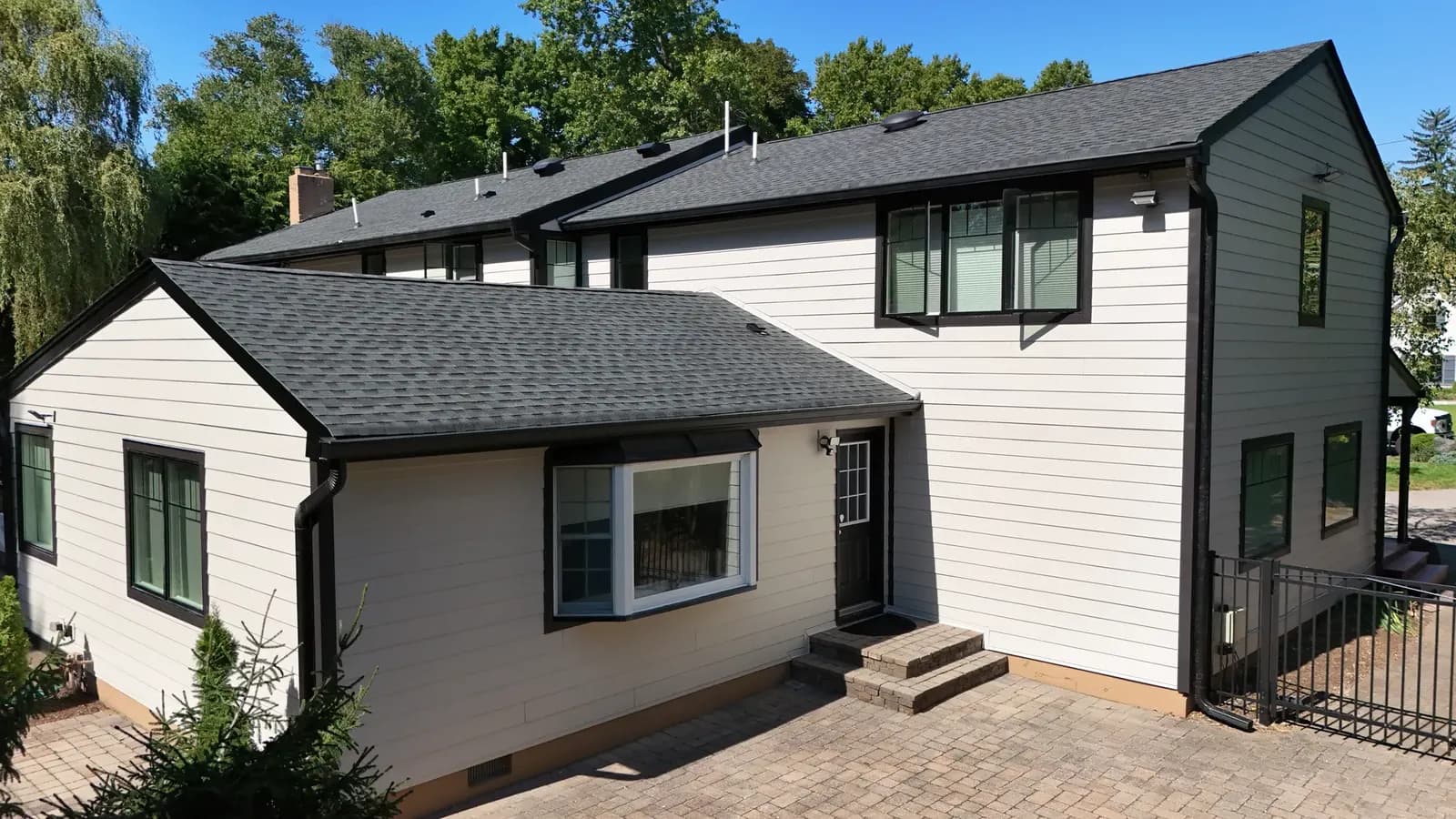
Gutters and fascia can fail together because one hangs on the other. Overflow wets the fascia, rot weakens the hanger attachments and the gutter sags, making drainage worse. Repair costs depend on how far the damage extends, access and whether the gutter can be reused. Your project consultant gives an exact written estimate at the free inspection.
The fix is to repair both in the right order and stop the water that started it. Here is how the failure works, how fascia materials affect the repair, and the sequence that keeps you from paying for the same repair twice. For a refresher on the terms, see the parts of a gutter explained.
How Gutters and Fascia Fail Together
The fascia is the board along the ends of the rafters. It carries the gutter, closes off the roof edge, and on most older New Jersey homes it is painted wood. Wood is fine as long as it stays dry. AZEK, a trim manufacturer, puts it plainly: wood fascia is vulnerable to rot and pests and needs regular maintenance.
The cycle usually runs like this:
- Leaves clog the gutter, or a seam starts to drip.
- Water spills over the back edge or runs down the face of the fascia.
- Paint blisters, the end grain soaks up water, and rot starts behind the gutter where nobody looks.
- Hanger screws and spikes loosen in the soft wood, and the gutter tips forward or sags.
- The sag holds standing water, which overflows sooner and soaks the wood further.
InterNACHI’s inspection guidance tells inspectors to eyeball the gutter margin against the fascia for this reason, and names trapped moisture as a cause of mold and wood rot. New Jersey winters speed it up. Ice that fills a clogged gutter adds weight, and University of Minnesota Extension explains that form when attic heat melts roof snow that refreezes at the cold eave, right where the fascia sits.
The Drip Edge Gap
Plenty of rotted fascia has nothing to do with a clogged gutter. Water running off the shingles clings to the underside of the roof edge and wicks back toward the wood. Drip edge, an L-shaped metal at the roof edge, stops that by holding water off the fascia and dropping it into the gutter. Section R905.2.8.5 of the International Residential Code requires drip edge at the eaves and rake edges of asphalt shingle roofs.
Two problems are common on older houses in towns like Clifton and Fort Lee: roofs from before the requirement with no drip edge at all, and gutters hung so that a gap opens between the back of the trough and the flashing. Either way, water lands on the fascia instead of in the gutter. Fixing the fascia without closing that gap means fixing it again in a few years.
Fascia Materials Compared
When fascia comes off, the replacement material must suit the exposure and provide sound gutter support. Compare its moisture behavior, finishing needs and installation details.
| Material | Installation consideration | How it handles water |
|---|---|---|
| Wood or cedar board | Paint and protect the board from water | Rots if paint fails or water gets behind the gutter |
| Fiber cement | Account for handling, fastening and paint | Cement based, so not a food source for rot; must be painted |
| PVC | Use the specified fastening and movement details | Highly resistant to rot, mold and insects (AZEK) |
| Vinyl | Inspect the underlying wood before covering it | Often installed as a cover over wood; check the wood first |
| Aluminum | Repair the wood and water path before wrapping | Resists corrosion; a wrap over wood traps any moisture behind it |
For most houses the practical choice is between new primed wood wrapped in aluminum to match the gutters, and solid PVC board that needs no wrap. Both work if the water problem is solved first.
What Gutter and Fascia Repair Costs
A combined repair may involve taking the gutter down, removing damaged fascia, restoring the roof-edge water path and rehanging or replacing the gutter. The damaged length, house height and condition of hidden wood determine the scope. The proposal should identify both the fascia work and the gutter work.
The Right Order of Repair
- Find the water. Clogged gutter, leaking seam, missing drip edge, a gap behind the gutter, or ice dams from a warm attic. Note which one, because it decides the rest.
- Take the gutter down along the damaged stretch, and further if hangers have pulled.
- Cut out rot back to sound wood and check the rafter tails behind the board. Soft rafter ends need carpentry before any fascia goes on.
- Install the new fascia, primed on all sides if it is wood.
- Fix the roof edge. Add or correct the drip edge so water drops into the gutter, not behind it.
- Rehang or replace the gutter with hangers into solid wood and a fall of 1/16 inch per foot toward the outlet, the slope InterNACHI recommends.
On permits: the gutter part needs none in New Jersey, because N.J.A.C. 5:23-2.7 lists the repair, replacement or installation of gutters and leaders as ordinary maintenance. If rafter tails or other framing need repair, ask your town’s construction office before work begins.
How Future Remodeling Handles Gutter and Fascia Work
Future Remodeling is FHRG LLC, at 37A Woodbine St, Bergenfield, NJ 07621, licensed as a New Jersey home improvement contractor, license 13VH13329600. Future Remodeling installs seamless K-style and half-round gutters, and the in-home estimate is free. Whoever does the work, ask that the proposal name the source of the water, the linear feet of fascia being replaced and the replacement material, and say whether drip edge is being added or corrected. We work in New Jersey and Westchester County, NY, with most jobs in Bergen County; see the service areas. More about gutter work is on the gutters page, and if the gutters themselves are near the end, seamless gutter installation in NJ explains the replacement.
Frequently Asked Questions
Can you replace fascia without removing the gutters?
Not properly. The gutter hangs on the fascia, so the gutter has to come down to cut out rotted wood, check the rafter ends behind it and fasten the new board. A sound gutter can usually be rehung afterward.
Should fascia be wrapped in aluminum?
Wrap is a good finish over sound, dry wood. Over damp or soft wood it hides rot while it spreads. Replace the bad sections first, then wrap or switch to a PVC board.
How do I know if my fascia is rotten?
Look for peeling paint, dark stains and gaps behind the gutter, then press a screwdriver into the board near a hanger. Sound wood resists. Rotten wood gives, and a hanger in it will not hold for long.
Recap
Overflowing gutters and missing or badly lapped drip edge can damage the fascia. Find the water source, remove damaged wood, install a suitable replacement board, restore the roof edge and rehang the gutter with the correct pitch. The exact written estimate should cover each step needed for your home.
If your gutter is pulling away from a stained or soft fascia, contact us or get a free estimate.