Vinyl Gutter Installation: Steps, Tools and Mistakes to Avoid
How to install vinyl gutters step by step, the tools you need, the mistakes that cause leaks, and why seamless aluminum suits NJ winters better.
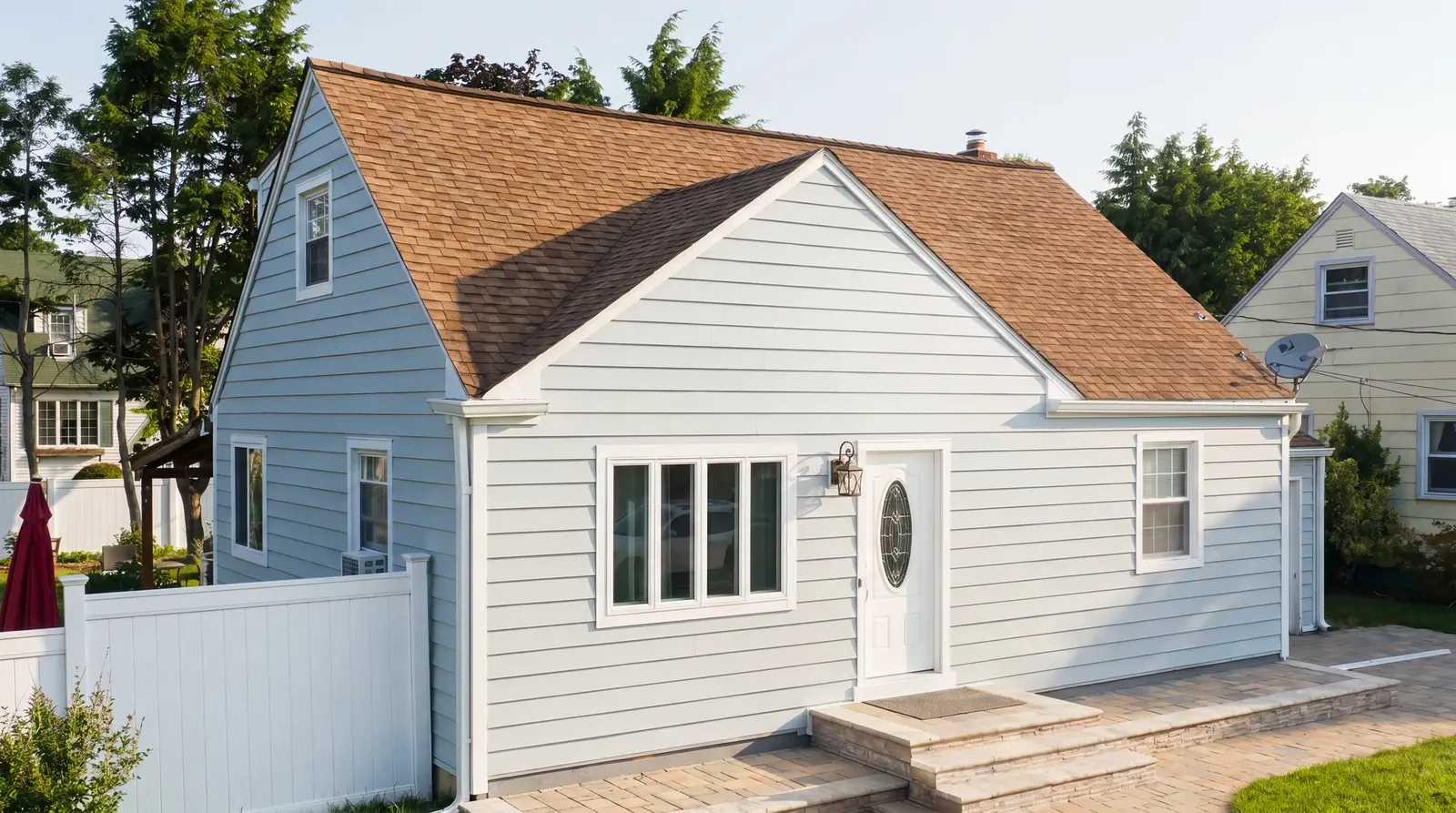
Vinyl gutters come in 10-foot sections that snap together. Installation involves measuring, marking a sloped line, hanging the hooks, joining sections, setting outlets and running . A sound and safe access are essential before work begins.
This is an honest guide to doing it well, built on the manufacturer’s own instructions, followed by the reasons we install seamless aluminum instead on New Jersey homes. For the names of every piece, see what the parts of a gutter are called.
What Vinyl Gutters Cost
An installation estimate depends on the measured runs, number of joints and outlets, downspout layout and access. Removing old gutters or repairing fascia adds to the scope. Your project consultant reviews those conditions at the free inspection and gives an exact written estimate so you can compare the complete project.
Tools and Parts
Amerimax’s installation sheet lists the tools: eye protection, pencil, tape measure, string, level, hacksaw, and a drill with a screwdriver bit. Add a chalk line, a sturdy extension ladder with a stand-off, and a helper to hold the far end of each section.
The parts list for a typical run:
- 10-foot gutter sections and joiners to connect them
- Hidden hooks (hangers), about five per section
- End caps, inside and outside corners
- Drop outlets, downspouts, A and B elbows, and downspout clips
- Splash blocks or extensions to carry water away from the house
- 1-1/2 inch screws for the hooks and 1/2 inch self-tapping, rust-resistant screws
How to Install Vinyl Gutters, Step by Step
These steps follow the Amerimax instructions for its traditional vinyl system. Other brands differ in detail, so read the sheet in your box before you cut anything.
1. Measure and plan downspouts
Measure each roof edge that needs a gutter. Divide by 10 feet for the number of sections, and multiply the sections by five for the number of hooks. Mark the high points and the downspout locations so each downspout serves no more than 40 feet of gutter, then check whether roof area and rainfall call for more. Put each downspout where the water can be led away from the foundation.
2. Snap a sloped guide line
At the high point, mark 1/2 inch below the top of the fascia. Snap a chalk line from there that drops 1/8 inch for every 10 feet toward the downspout. Every hook and outlet hangs from this line, so check it twice.
3. Hang the hooks
Hooks go 12 inches from each end and 18 to 24 inches apart, fastened to the fascia with 1-1/2 inch screws, the top of each hook on the chalk line. The instructions are blunt that the fascia must support gutters filled with water. If it is missing or soft, the kit calls for rafter brackets instead.
4. Join the sections
Slide the inner joiner piece under the back lip and press it into the front lip, slide the next section on, then snap the outer piece over and fix it with two 1/2 inch self-tapping screws through the dimples. Dipping fittings in soapy water makes them slide together without forcing.
5. Set the drop outlets
Fasten each drop outlet to the fascia 1/2 inch below the sloping line before cutting the final gutter lengths. Cut those lengths to the temperature marks molded into the outlet, which allow for the vinyl to grow and shrink. Never drive a screw through the outlet into the gutter.
6. Run the downspouts
Screw an elbow to the outlet, hold a second elbow against the wall, and cut a short piece of downspout to join them. Run the downspout to 6 to 12 inches above the ground, adding a connector past 10 feet, and set two clips to the wall for every 10 feet. Finish with an elbow and an extension or splash block.
Mistakes to Avoid
- Ignoring expansion. Vinyl moves with temperature. Gutters cut without the temperature marks, or pinned with screws through outlets, buckle in summer and pull apart in winter.
- Hanging on bad fascia. Hooks are no stronger than the board behind them. Probe the fascia with a screwdriver before you start.
- Too few downspouts. A long run feeding one outlet overflows in a summer downpour, however carefully it was pitched.
- Working in the cold. Fixr notes that PVC gutters can crack in frosty conditions and break under snow or ice. Cutting and snapping cold vinyl makes that worse, so install on a mild day.
- Dumping water at the wall. A downspout with no extension sends roof water straight into the basement.
You do not need a permit for any of this in New Jersey. N.J.A.C. 5:23-2.7 treats installing exterior gutters and leaders as ordinary maintenance.
Vinyl vs Seamless Aluminum in New Jersey
Vinyl is a fair choice for a shed, a garage or a mild climate. On a house in Montclair or Morristown that sees repeated freeze and thaw, ice in the trough and heavy summer storms, its weak points line up with the weather.
| Factor | Sectional vinyl | Seamless aluminum |
|---|---|---|
| Installation needs | Hooks, joiners, outlets and sectional assembly | On-site forming, corners, outlets and hangers |
| Joints along a 40-foot run | Three joiners plus ends | None between corners and ends |
| Cold weather | Can crack in frost, break under ice | No cold-cracking warning in Fixr’s guide |
| Published lifespan | 15 to 20 years (Fixr); 25+ (InterNACHI) | 20 to 25 years (Fixr); 20 to 40+ (InterNACHI) |
Sources: vinyl cold-weather notes from Fixr’s PVC guide; aluminum lifespan from Fixr’s aluminum guide (2022 figures); lifespans from InterNACHI. HomeAdvisor adds that vinyl lasts closer to 10 years where the weather is severe.
Seamless aluminum is formed on site in one piece from corner to corner, reducing the number of joints that need sealing and maintenance. The forming equipment, access and support layout belong in the installation plan.
How Future Remodeling Installs Gutters
Future Remodeling (FHRG LLC, Bergenfield, NJ, #13VH13329600) installs seamless aluminum K-style and half-round gutters rather than vinyl, and the in-home estimate is free. Whichever material you choose, ask that the proposal list the gutter size, the downspout size and each downspout location, so two estimates can be compared line by line. We cover New Jersey and Westchester County, NY; check the service areas, read about seamless gutter installation in NJ, or see the gutters page. Call (201) 371-5515.
Frequently Asked Questions
Can I install vinyl gutters myself?
On a one-story house with sound fascia, yes. The parts snap together and the tools are basic. The hard parts are working safely from a ladder and getting the slope and expansion allowance right. Two-story eaves are a different job, and most homeowners are better off hiring them out.
How much slope do vinyl gutters need?
Amerimax’s instructions call for the guide line to drop 1/8 inch for every 10 feet toward the downspout. Follow the slope printed in the instructions for the system you bought, since each manufacturer sets its own.
How long do vinyl gutters last?
Published figures vary. Fixr gives 15 to 20 years, HomeAdvisor says up to 20 years and closer to 10 in severe weather, and InterNACHI lists 25 years or more. Cold winters and full sun push a system toward the low end.
Recap
Plan downspouts so none serves more than 40 feet of gutter, snap a line that falls 1/8 inch per 10 feet, hang hooks 18 to 24 inches apart on sound fascia, cut to the temperature marks, and carry the water away from the foundation. Vinyl is workable for a DIY project on a low roof. For a house that has to ride out New Jersey winters, seamless aluminum has fewer joints to fail.
Weighing vinyl against seamless for your house? Get a free estimate.