Solar
Solar Shingles vs Solar Panels: Which Fits a NJ Roof?
Compare and panels for NJ roofs: output, roof age, appearance, installation and upkeep. Learn which factors shape the project scope.
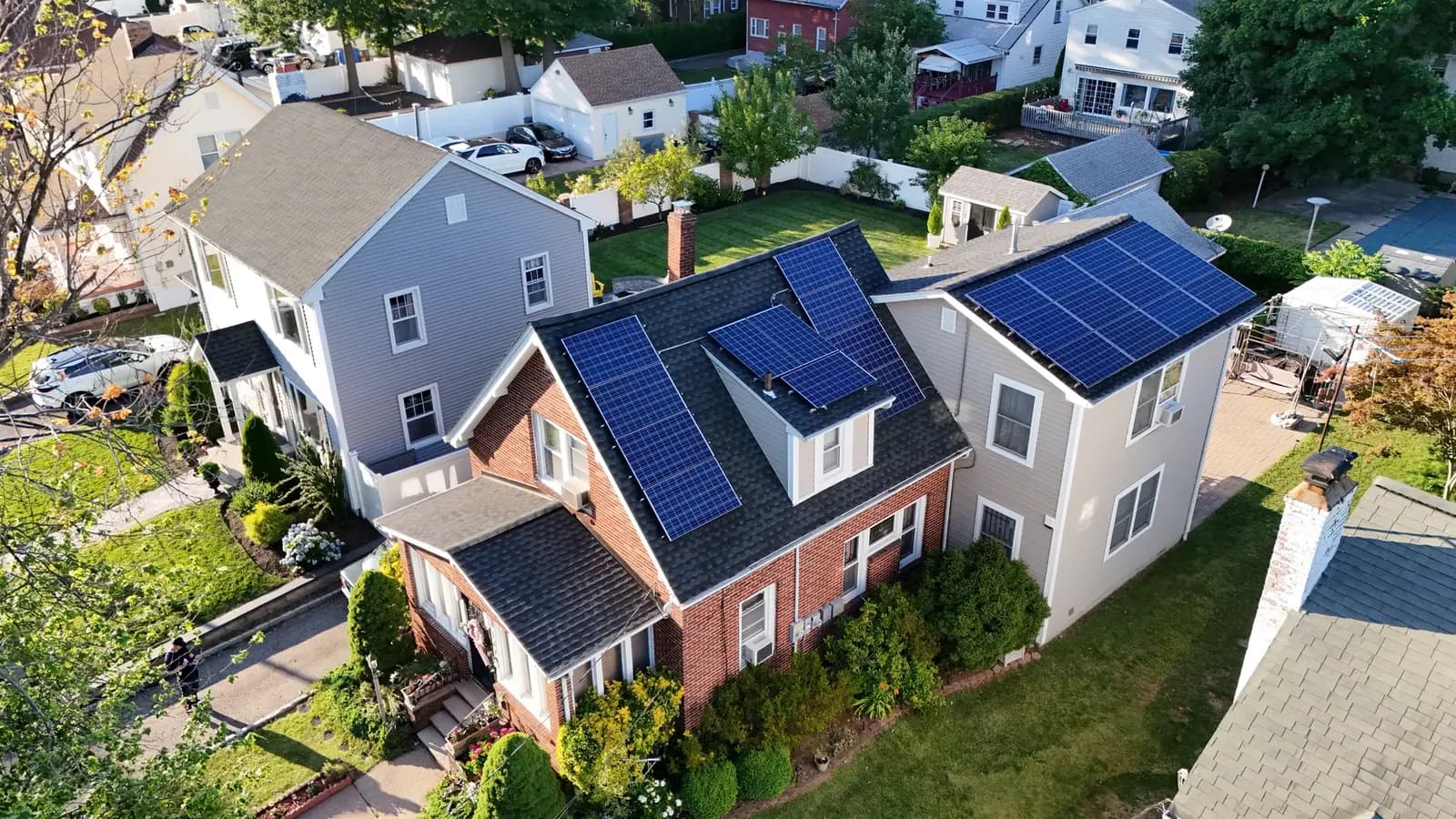
If your roof has many good years left, rack-mounted panels may suit the project. If the roof needs replacement, solar shingles let the roof and solar installation be planned together. Roof condition, usable area, shading and electrical work shape the scope. Your project consultant gives an exact written estimate at the free inspection.
The rest of this guide covers output, cost, roof age, looks, HOA rules and upkeep, so you can tell which side of that line your house is on.
The Short Answer
- Roof under ten years old and in good shape: panels are usually the better buy.
- Roof due for replacement: price both. Solar shingles fold the roof and the solar into one project.
- Looks matter most, or the street is strict about appearance: shingles sit flush and read as a roof.
How Each System Works
Solar shingles
A solar shingle is the roofing. The GAF Timberline Solar® ES 2 is a 68¾ by 16⅞ inch energy shingle that is nailed to the deck alongside ordinary Timberline® asphalt shingles, by the same roofing crew with the same tools. GAF lists it at for fire, ASTM D3161 Class F for wind and UL 2218 Class 4 for impact (on packages bearing that statement), and it is certified to UL 3741 for rapid shutdown. It needs a pitch of at least 2 in 12.
Rack-mounted panels
A panel system sits on top of the existing roof. Aluminum rails are bolted through the shingles into the rafters, every attachment is flashed, and the panels clamp to the rails a few inches above the surface. The roof underneath stays a normal roof and keeps doing the waterproofing.
Power Output per Square Foot
GAF rates the ES 2 at 57 watts per shingle and 23 percent more power than the first-generation shingle. At about 30 energy shingles per square, that is 1.7 kilowatts per 100 square feet, or roughly 17 watts per square foot of covered roof.
Panels still pack more power into the same area. EnergySage’s comparison notes that leading panels exceed 22 percent efficiency, while solar shingles have generally been under 20 percent. On a big, unshaded south roof in Clifton the difference barely matters. On a small or chopped-up roof in Fort Lee, where every sunny square foot counts, it can.
To put it in house terms: EnergySage’s average New Jersey system is 12.34 kilowatts. By our arithmetic, that would take about 217 ES 2 shingles, roughly 7.3 squares or 730 square feet of sunny roof.
What Shapes a Solar Installation Estimate
For rack-mounted panels, the estimate needs to account for system size, mounting, roof condition and electrical work. Access and the layout of usable roof areas also affect installation. Ask for those items to be described in writing.
A solar shingle proposal includes roofing work as well as solar equipment. Compare it with the complete scope of a new roof plus rack-mounted panels, rather than comparing solar equipment alone. Identify removal, roof preparation, and electrical work in both proposals.
| Factor | Solar shingles (Timberline Solar® ES 2) | Rack-mounted panels |
|---|---|---|
| Output | 57 W per shingle, about 17 W per sq ft | More per sq ft; leading panels exceed 22% efficiency |
| Project scope | Roof replacement, solar shingles and electrical work | Roof assessment, mounting and electrical work |
| Role | Is the roofing over the solar area | Sits on top of the existing roof |
| Best timing | During a roof replacement | On a roof with most of its life left |
| Look | Flush, low profile | Raised panels on rails |
| Who installs | A roofing crew, plus an electrician for the wiring | A solar installer |
Roof Age Decides Most of It
The Department of Energy’s homeowner’s guide to going solar tells buyers to consider the age of the roof and how long until it needs replacing. The reason is simple arithmetic. Panels now last 25 to 35 years on average, according to the Department of Energy, and the InterNACHI chart gives an architectural shingle roof about 30.
Put panels on a 15-year-old roof in Teaneck and the roof will need replacing around the middle of the panels’ working life. That means paying to take the array down, store it, reroof, and put it back up. Put panels on a new roof, or put solar shingles in as part of the new roof, and the two wear out on roughly the same clock. If your roof is more than about ten years old, have it inspected before you sign a solar contract. Our guide to how long roofs last in NJ covers what to look for.
Looks, HOAs and NJ Rules
Solar shingles are the quieter option. They are nailed in courses alongside the asphalt shingles, with no rails and no gap underneath, so from the street the roof reads as a roof. Panels are visible from most angles, though all-black modules on a dark roof are less obvious than they used to be.
On HOAs, New Jersey law limits what an association can do. A 2007 law, described in the Senate committee statement, bars associations from prohibiting solar collectors on the roof of a single-family home owned by an individual, or a townhouse whose owner is responsible for roof repairs. The association may still set rules on placement, color, concealment of hardware and total size, as long as those rules do not raise the installation cost by more than 10 percent or stop the system working at full efficiency. Condominiums with a shared roof are a different situation, so read your master deed and ask the board in writing.
Maintenance and Lifespan
Neither system needs much routine care, and rain rinses both. Panels have one maintenance quirk worth knowing in leafy towns like Montclair and West Orange: the gap under the rails collects leaves and can attract nesting squirrels and birds, so some owners add critter guards. Shingles have no gap.
Repairs differ too. A panel is unbolted and swapped. A solar shingle is part of the , so replacing one is a roofing job as well as an electrical one, which is a reason to have the same company responsible for both.
Incentives
Federal and New Jersey incentive programs for home solar exist, and their terms change. The Department of Energy’s homeowner guide explains how federal and state programs work, and the New Jersey Board of Public Utilities runs the state’s clean energy programs. Whether a program applies can differ between shingles and panels and between buying and leasing, so confirm current terms with the program and your tax advisor before you count on anything. Payment options for the roof itself are on our financing page.
How Future Remodeling Handles This
Future Remodeling (FHRG LLC, 37A Woodbine St, Bergenfield, NJ 07621, (201) 371-5515, #13VH13329600) installs GAF Timberline Solar® shingles together with GAF Timberline HDZ® and UHDZ asphalt shingles, so the solar and the roof come from one manufacturer and one crew. The company is GAF Solar Certified and GAF . Details are on the solar page and the solar shingles page, and the shingle side is on the asphalt roofing page.
The in-home estimate is free. Whoever you talk to, ask for the roof’s condition and remaining life in writing before you compare solar estimates, since that decides which system makes sense. Work covers New Jersey and Westchester County, NY; see the service areas. The warranty page sets out what each manufacturer’s document actually says.
Frequently Asked Questions
Do solar shingles work in New Jersey winters?
Yes. GAF lists an average ambient temperature range of minus 40°F to 122°F for the Timberline Solar® ES 2. Like panels, they produce less in short, cloudy December days and nothing while buried under snow, and they resume once the snow slides or melts off.
Can solar shingles cover just part of the roof?
Yes, and that is the normal layout. The energy shingles go on the sunniest plane, usually the south or west face, and regular Timberline® asphalt shingles cover the rest of the roof in a matching color.
Do solar panels damage the roof?
Not when they are flashed correctly on a roof in good condition. Every rack attachment is a hole through the roofing, so each one must be sealed and flashed. The bigger risk is timing: panels on an old roof have to come off when that roof is replaced.
Are solar shingles less efficient than panels?
Per square foot, generally yes. Panels have more cell area and run cooler because air moves under them. The gap has narrowed: the current GAF shingle produces about 17 watts per square foot of covered roof.
Recap
- Panels produce more power per square foot; roof condition and mounting needs affect the installation scope.
- GAF Timberline Solar® ES 2 produces 57 watts per shingle, about 1.7 kW per square.
- Roof age is the deciding factor: shingles fit a replacement, panels fit a newer roof.
- Shingles look like a roof; panels look like panels.
- NJ law limits how far most HOAs can restrict rooftop solar.
To find out whether your roof is ready for solar, get a free estimate.