How Much Does Siding Cost in NJ?
Siding costs depend on materials, wall area, removal and trim. Learn the NJ permit rules and get a written estimate at a free inspection.
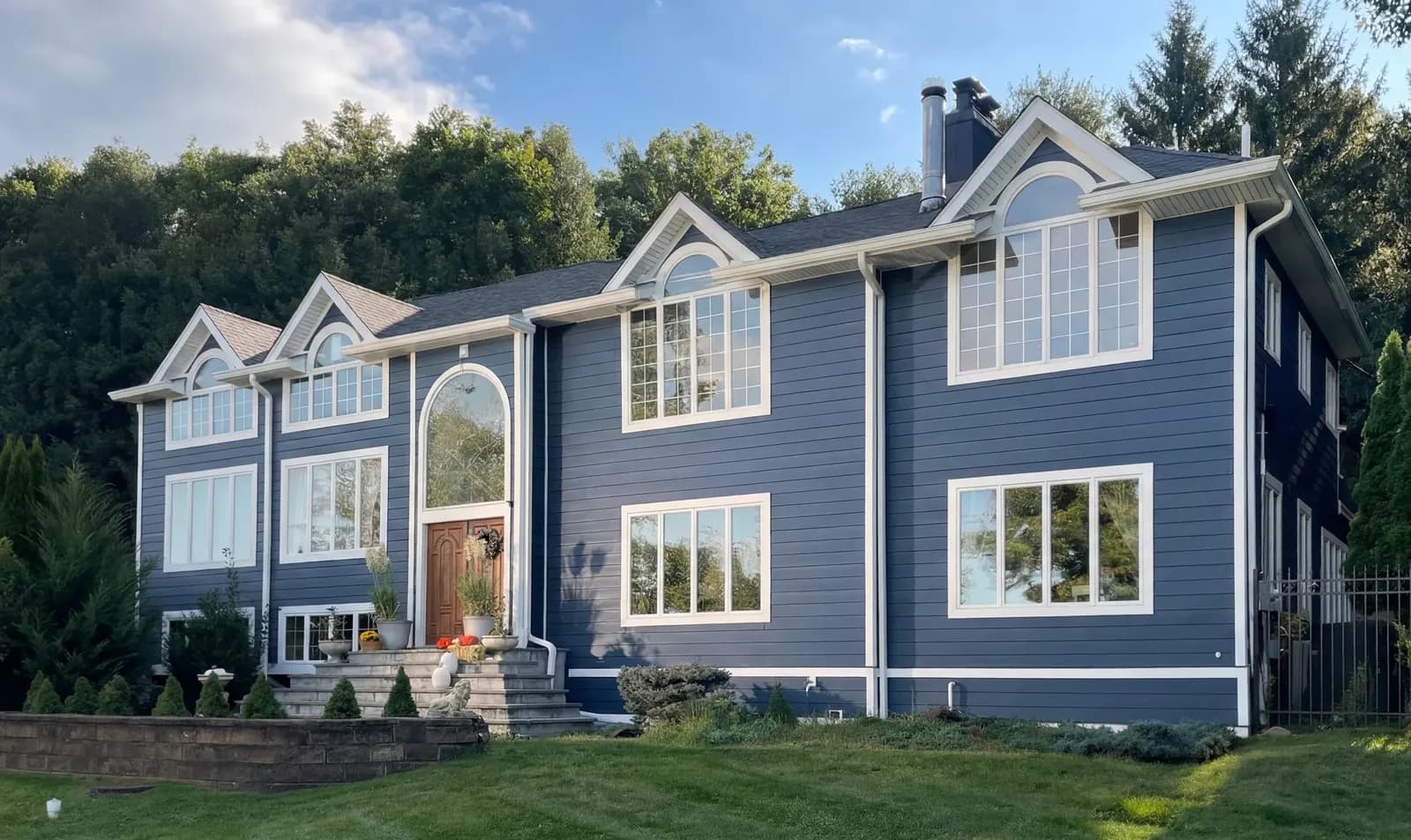
Siding costs depend on the material, measured wall area, existing layers and condition of the . Trim details, height and access also affect the installation. Your project consultant reviews these at the free inspection and gives an exact written estimate.
Here is what changes the scope for your house and which items belong in the proposal.
Siding Materials and Cost Drivers
Start with measured wall area, then compare the material, removal and installation requirements. Floor area alone does not account for gables, openings, corners or trim.
| Material | Installation considerations | What to clarify in the estimate |
|---|---|---|
| Vinyl | Panel profile, movement allowance and trim details | Removal, wall preparation and accessory pieces |
| Engineered wood | Cut edges, flashing and finish requirements | Panel style, trim and finishing scope |
| Fiber cement (James Hardie and others) | Heavy boards, cutting and fastening requirements | Handling, dust collection and trim details |
| Stone veneer | Accent area and masonry-style installation details | Wall preparation and transitions to other cladding |
Stone veneer often appears along the foundation, around an entry or on a chimney. Measure the accent area separately and specify how it meets the siding, and trim.
A whole-house estimate needs to describe your walls rather than rely on a national average. Ask for removal, sheathing repair, , flashing and trim to be listed clearly so proposals cover the same work.
How Much Siding Does a New Jersey House Need?
Siding is measured by wall area, not floor area, and contractors usually order it in squares. One square is 100 square feet. To estimate your own house, multiply the length of each wall by its height, add the triangles of the gables, and subtract the large openings such as garage doors and picture windows. Most estimators leave small windows in the count, because the cutting waste around them uses up roughly the same material.
The shape of the house matters as much as its size. A center-hall colonial in Teaneck or Bergenfield has tall, flat walls that go up quickly. A Cape Cod in Fair Lawn has dormers, short walls and a lot of trim for its size, so installation takes more detail work. A split-level in Wayne mixes one and two story walls and needs more corner posts and transitions than its footprint suggests.
What Drives the Price Up or Down
Two houses with the same wall area can need very different work. These line items explain why their estimates differ.
- and disposal. Existing layers and material type determine the removal work and debris handling. Aluminum over original wood clapboard requires a different removal plan from a single layer.
- Sheathing repair. Nobody can price rot before the old siding comes off. A good proposal names a per-sheet price for replacing damaged sheathing so the surprise is a known number.
- Weather barrier and flashing. , window flashing tape and where a roof meets a wall are small costs that decide whether the walls stay dry for decades. They belong in every bid, written out.
- Trim. Corners, window and door casings, frieze boards and add material and installation work. Specify the material and the areas to be replaced.
- Height and access. A second or third story means staging or pump jacks, and a house set tight to the lot line in Fort Lee or Cliffside Park can be slower to work on than one with open yards.
- Labor. Wall height, access, panel handling and detail work shape the installation effort. Ask how these conditions are reflected in the written estimate.
The Materials, One at a Time
Vinyl
Vinyl is one of the lower-cost options for residing a house and never needs paint. It moves with temperature, so it has to hang loosely on its nails. The Polymeric Exterior Products Association notes it can expand and contract half an inch or more over a 12 foot 6 inch panel.
Fiber cement
costs more to buy and more to install, because it is heavy and has to be cut with dust collection. In return it is noncombustible, holds paint well and does not sag in summer heat. James Hardie says its HZ5 products resist shrinking, swelling and cracking after years of wet or freezing conditions. See the Hardie® fiber cement siding page.
Engineered wood
Engineered wood is wood strands bonded with resin and a factory finish. It is lighter than fiber cement and has a real wood look. It is still a wood product, so the paint film and the sealed cut ends have to stay intact, which matters in a climate with as much freeze and thaw as ours.
Stone veneer
Manufactured stone, including panelized systems such as Versetta Stone®, is a finishing detail on many New Jersey houses, paired with above it. Accent size, wall preparation and transitions determine the installation scope.
To see every siding material side by side, with sources, open our siding materials comparison.
Permits and Lead Paint in New Jersey
New Jersey treats most siding work as ordinary maintenance. N.J.A.C. 5:23-2.7 lists the repair or replacement of existing siding on one and two family dwellings as ordinary maintenance, which needs no permit application and no notice to the construction official. Polypropylene siding is the named exception. A town with a local historic district can still have its own review, so ask the zoning office before you pick a color.
Lead paint matters more than permits. Federal lead rules generally apply to work that disturbs paint in housing built before 1978, unless the surfaces have been tested or certified free of lead-based paint. The EPA Renovation, Repair and Painting rule requires a certified firm once a job disturbs more than 20 square feet of exterior paint, and stripping painted siding or trim from a whole house goes well past that. Where the rule applies, lead-safe containment and cleanup are part of the price, and a bid that leaves them out is not comparable to one that includes them.
How Future Remodeling Handles Siding
Future Remodeling (FHRG LLC, 37A Woodbine St, Bergenfield, NJ 07621, (201) 371-5515, New Jersey home improvement contractor license 13VH13329600) installs Hardie® fiber cement siding, including Hardie® Plank, Hardie® Shingle and , as well as vinyl siding and Versetta Stone®. The company holds James Hardie™ ALLIANCE Elite tier status and is an .
Whoever you hire, a siding proposal should list tear-off, weather barrier, trim and any sheathing allowance as separate lines, so two bids can be compared line by line. The estimate is free and in-home. We work across New Jersey and Westchester County, NY, with Bergen County the largest share; see the service areas page. The siding page shows the full range, and the financing page explains payment options. Before you compare bids, read the questions to ask a siding contractor.
Frequently Asked Questions
Can new siding go over the old siding?
Sometimes, if the old layer is flat, dry and sound. Stripping to the sheathing is usually the better move, because that is the moment to find rot, add a proper weather barrier and flash the windows. Covering a problem only hides it until it costs more.
Do I need a permit to replace siding in NJ?
Not for a one or two family house in most cases. The state construction code lists repair or replacement of existing siding on one and two family dwellings as ordinary maintenance, with polypropylene siding as the stated exception. A historic district or an HOA can still have its own rules.
What time of year suits siding work in New Jersey?
Spring through fall is easiest. Vinyl can go up in cold weather if the installer leaves extra expansion room, and fiber cement is not bothered by temperature, but caulk and paint touch-ups need warmer, dry days to cure properly.
How long does a siding job take?
It depends on the material, the amount of trim and the weather. James Hardie puts a typical installation of its own siding at seven to 14 days.
Recap: What Siding Costs in NJ
- Vinyl: compare panel profiles, trim and movement allowance.
- Engineered wood: specify edge treatment, flashing and finishing.
- Fiber cement: account for board handling, cutting and fastening.
- Stone veneer: measure the accent area and detail its transitions.
- Whole house: include tear-off, wall preparation, weather barrier, flashing and trim in the exact written estimate from your free inspection.
The material sets the floor. Tear-off, trim, height and what is hiding under the old siding decide the final number. To see yours on paper, get a free estimate.